Lo Studio Fiorentino en de ingrijpende tussenkomsten van de Medici (1405-1737).
Lo Studio Fiorentino en de ingrijpende tussenkomsten van de Medici (1405-1737).
De stichting van de universiteit in Firenze in 1321/49 was een initiatief van het republikeinse stadsbestuur (zie art. Hoe lo Studio Fiorentino een volwaardige universiteit werd), maar toen de leden van de familie de’ Medici in de volgende eeuwen het bewind overnamen hebben zij ook het hoger onderwijs naar hun hand weten te zetten.
De universiteit werd sedert 1385 in goede banen geleid door de 8 ufficiali dello Studio (de bestuurders) en als eerste lid van de bankiersfamilie, maakte Giovanni di Bicci de’ Medici daar in 1404/5 deel van uit. De uffuciali, die aangesteld werden door de Signoria (het stadsbestuur), waren verantwoordelijk voor de logistieke organisatie, het aantrekken van de docenten en uiteraard ook voor de financiering. In dat verband waren de ufficiali van 1404/5, wegens de oorlog met Milaan, genoodzaakt geweest om de toelage voor de Studio (die in de vorige jaren nog 1500 à 2.000 florijnen kon bedragen) stevig te verlagen en zelfs te schrappen. Die maatregel was er dan ook de oorzaak van dat de studio in 1407 de deuren moest sluiten.
In 1413 kon de studio, met een dotatie van 1500 fl. opnieuw van start gaan. Cosimo (il Vecchio) de’ Medici werd dus in gunstigere omstandigheden dan zijn vader lid van de ufficiali voor de academiejaren 1416/17 en 1421/22. Aangezien hij stilaan één van de rijkste en machtigste mannen van Firenze geworden was moest hij geen lid meer zijn om bepaalde beslissingen in verband met de Studio te nemen.
Zo had hij in 1425 Giovanni Aurispa aangetrokken om de leeropdracht Grieks te komen invullen en in 1429 had hij Palla Strozzi (lid van de ufficiali in 1428/29) zijn steun gegeven in verband met de aanstelling van Francesco Filelfo. Die laatste was overgekomen uit Bologna om aan de Florentijnse studia humanitatis Griekse en Latijnse letterkunde en moraalfilosofie te komen doceren (zie fig.1).
Met de studia humanitatis (of humaniora) werd het humanistische curriculum bedoeld dat zich richtte op grammatica, retorica, poëzie, geschiedenis en moraalfilosofie, waarbij de studie en interpretatie van Griekse en Latijnse klassieke teksten centraal stond.
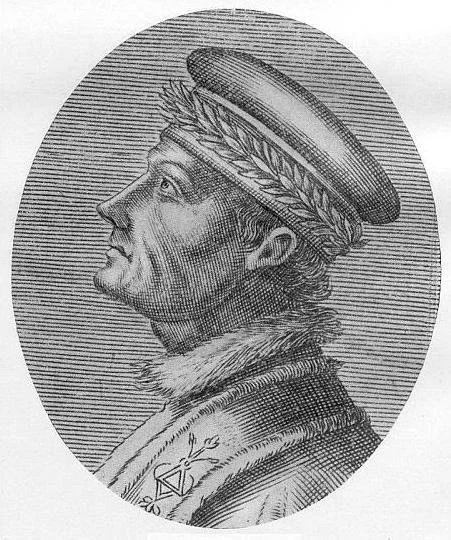
Fig.1 Francesco Filelfo (A. Gudeman, Imagines philologorum, Berlijn, 1911)
De hoogmoedige Filelfo was niet erg populair bij zijn collega’s en om van hem verlost te geraken zouden zij zelfs bereid geweest zijn om de salarissen van alle docenten te laten verlagen. Dat voorstel werd echter verworpen en Filelfo bleef op post en behield zijn hoge jaarwedde van 300 fl. mede dank zij de steun van Strozzi. Maar toen hij zich in het conflict tussen Cosimo de’ Medici en Rinaldo degli Abizzi aan de kant van deze laatste geschaard had werd hem in oktober 1431 zijn leerstoel afgenomen. Cosimo’s broer Lorenzo il Vecchio was toen één van de ufficiali en de Signoria, die toen de beslissing moest nemen, stond onder leiding van Agnolo Pandolfini, een aanhanger van de Medici-factie. Het academisch conflict was een politiek conflict geworden.
Na zijn herbenoeming in 1433 bleef Filelfo uithalen naar Cosimo en toen die in 1434 uit ballingschap terugkeerde werd hij samen met Rinaldo degli Albizzi en Palla Strozzi verbannen (zie art.Cosimo de’ Medici’s verbanning en terugkeer (1433-34).
Filelfo kon aan de slag in Siena en Carlo Marsuppini, die goed bevriend was met de Medici en Filelfo al in 1431 tijdelijk had vervangen (met een redelijk salaris van 150 fl.), werd in 1434 de belangrijkste docent van de Studio. In 1444 werd hij, ook op voorspraak van Cosimo, kanselier van Firenze.
Toen er aan de Florentijnse arts Galileo Bonaiuti gevraagd werd om geneeskunde te komen doceren aan de Studio Fiorentino was dat zeer waarschijnlijk ook op aandringen gebeurd van Cosimo de’ Medici. In 1446 werd Galileo zelfs gonfaloniere van de Signoria en het feit dat hij in 1430 ufficiale geweest was in de periode van de problemen met Filelfo, zal daar wellicht niet vreemd aan geweest zijn. Eén van Galileo’s nazaten was de beroemde wiskundige en astronoom Galileo Galilei.
Merkwaardig genoeg had Cosimo zich in 1429 niet achter het plan van de politicus en bankier Niccoló Uzzano geschaard om een Casa della Sapienza, een residentie voor 50 studenten, op te richten op de Piazza di San Marco (zie stadsplan). Hij zou bevreesd geweest zijn voor overlast in zijn buurt (hij woonde immers niet veraf in het Palazzo Medici in de Via Larga, nu Via Cavour), maar waarschijnlijk hebben toen ook al politieke motieven een rol gespeeld.
Uzzano was immers een goede vriend van Strozzi en Cosimo gunde zijn rivalen niet de eer om met dit initiatief bijval te oogsten. Het project is nooit volledig gerealiseerd geworden, maar het huidige rectoraat (op de Piazza San Marco) bevindt zich op de plaats waar de bouw van de Sapienza gepland was.
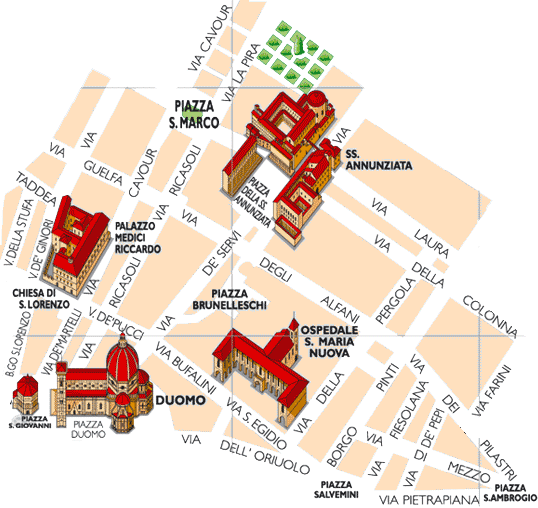
Stadsplan
Lorenzo il Vecchio de’ Medici, de broer van Cosimo, die reeds in 1431/32 lid van de ufficiali geweest was, zetelde na de machtsovername van Cosimo opnieuw in 1434/35, samen met de Medici-aanhangers Niccoló Piccoli en Alamanno Salviati. Lorenzo’s volgende lidmaatschap in 1436/37 en dat van Giovanni, Cosimo’s jongste zoon in 1437/38, was daar een logisch gevolg van.
Piero il Gottoso, Cosimo’s oudste zoon, die zijn vader als hoofd van de familie en van de republiek had opgevolgd was lid van de ufficiali in 1445/46, 1455/56 en 1458/61. Tijdens zijn 2de termijn werd het aantal ufficiali teruggebracht tot 5 en werden zij aangesteld voor 3 jaar. Samen met zijn politieke vrienden Luigi di Piero Guicciardini, Franco di Niccolò Sacchetti, Luigi di Lorenzo Ridolfi en Otto Niccolini had Piero volledige controle over de Studio. Hij benoemde in feite de docenten.
Toen Marsuppini in 1455 overleed werd zijn leerstoel (Grieks, filosofie, retorica en poëzie) ingenomen door Johannes Argyropoulos (die uit Constantinopel gehaald werd), Francesco da Castiglione en Cristoforo Landino. Deze laatste kreeg zijn vaste benoeming in 1458.
In datzelfde jaar werd echter ook Girolamo d’Agnolo Machiavelli (een oom van), die zelf aan de studio gestudeerd had en er al van in 1450 lessen in burgerlijk recht gaf, gearresteerd op verdenking van samenzwering tegen de Medici (zie art. Girolamo Machiavelli en de verkiezingsfraude van Cosimo de’ Medici).
Van Carlo de’ Medici, de natuurlijke zoon van Cosimo, is bekend dat hij tijdens het academiejaar 1468/69 in de examencommissie zetelde voor burgerlijk recht.
Van Piero’s zoon Lorenzo il Magnifico is geweten dat hij tussen 1473 en 1486 verscheidene keren lid van de ufficiali geweest is. In 1473 was hij lid van het vijftal toen de zeer belangrijke beslissing genomen werd om de Studio Fiorentino te laten samenwerken met de Studio Pisano (de universiteit van Pisa). Dat was reeds een onderwerp van discussie geweest in 1460 waarbij de vraag gesteld werd of een dergelijke operatie financieel gunstig of ongunstig was voor Firenze. Piero de’ Medici heeft toen de knoop niet willen doorhakken, maar Lorenzo heeft dat in 1473 wel gedaan.
Volgens sommigen zou hij dat gedaan hebben om de overlast van de studenten te beperken, maar dat is het vrij zwak argument dat ook zijn grootvader al gebruikt had in 1429. Blijkbaar zou Il Magnifico de stad Pisa er economisch terug bovenop hebben willen helpen en haar het prestige hebben willen terug geven door de Studio die daar al bestond van in 1343 nieuw leven in te blazen.
Het studium generale van Pisa was dus ouder dan dat van Firenze en met de oprichting van de nieuwe Studio Fiorentino & Pisano, werd de instelling in feite een creatie van de Medici. Financieel gezien waren er de inkomsten van de aangetrokken studenten, maar was er ook een investering nodig. Lorenzo voorzag een dotatie van 6.000 fl. en had ook bekomen dat de paus, Sixtus IV, de stadsrepubliek de toelating gegeven had om een kerkelijke belasting te heffen op de Florentijnse geestelijkheid die jaarlijks 5.000 fl. kon opbrengen.
Het zwaartepunt van de universitaire studies lag in Pisa maar in de Studio van Firenze had il Magnifico een intellectuele kring van “gleichgestimmte Seelen” rond zich gevormd. Daar bleven de leergebieden (poëzie en retorica/ Grieks/ grammatica en Latijnse teksten) behouden, die nauw aansloten met zijn eigen humanistische visie, en waar mensen doceerden als Cristoforo Landino, Giovanni Argiropulo en diens opvolgers Andronico Callisto en Demetrio C(h)alcondila, Marsilio Ficino en Agnolo Poliziano. Deze laatste was door Lorenzo zelf in 1480 aangesteld om Landino te assisteren. Landino was het perfecte voorbeeld van de leraar, die jonge mannen een humanistische vorming kon geven die hen daarna als leden van de Florentijnse elite verbondenheid bezorgde met het Medici-regime. Hij is blijven lesgeven tot in 1497 (zie art. Girolamo Savonarola en de humanisten van de Studio Fiorentino). Aangezien er in Firenze geen graden en diploma’s verleend werden, waren de lesgevers (zoals Landino en Poliziano) daar in vele gevallen zelf ook geen universitair gegradueerden, maar persoonlijke vrienden van de Medici.
In Pisa had il Magnifico aan Lorenzo Lippi da Colle (lid van de Neoplatonische Academie) in 1473 de leerstoel letterkunde gegeven waarvoor die hem in zijn openingsrede uitvoerig bedankt had. In datzelfde jaar kreeg ook Oliviero Arduini, die Lorenzo er op uit gestuurd had om professoren weg te kapen uit andere universiteiten, een professoraat filosofie. Arduini’s bekendste leerling was in 1491/92 Francesco Cattani da Diacetto, de Florentijnse docent die naar het voorbeeld van Pico della Mirandola de filosofie van Plato en Aristoteles wilde harmoniseren.
Wanneer er in 1476 geen aanstalten gemaakt werd om de onderwijsopdracht van Bartolommeo da Pratovecchio (poëzie en retorica) in Pisa te verlengen, kwam il Magnifico persoonlijk tussenbeide om dat voor hem in orde te brengen.
Lorenzo benoemde ook zijn zwager Bernardo Rucellai, die al in 1478 deel uitgemaakt had van de ufficiali, in oktober 1480 lid van de commissie die zich in Pisa moest bezig houden met de administratieve hervormingen en de samenstelling van het docentencorps. Het onderwijsgebeuren lag dus grotendeels in Pisa, maar de controle gebeurde vanuit het Palazzo Medici in Firenze. In 1486 liet il Magnifico het Palazzo della Sapienza bouwen in Pisa waar nu nog steeds de hoofdzetel van de rechtsfaculteit gevestigd is.
Na de verbanning van Lorenzo’s zonen in 1494 was de universiteit door de oorlog met Pisa volledig verspreid geraakt over noodlocaties in Firenze, Prato en Pistoia. Bij hun terugkeer wilden de Medici de universiteit direct weer gebruiken als een instrument voor politiek prestige en stabiliteit en mede dankzij de financiële steun van Giovanni de’ Medici (paus Leo X) kon men terug van start gaan in Pisa.
Giulio de’ Medici, toen nog kardinaal, zorgde in 1515 voor de feestelijke heropening van de Studio in Pisa, waar de verspreid geraakte faculteiten weer gecentraliseerd werden. Er werd werk gemaakt van een financiële hervorming waarbij de inkomsten van de universiteit rechtstreeks aan de wijnaccijnzen gekoppeld werden. De kardinaal trok weer topjuristen aan, zoals Filippo Decio die met gigantische salarissen werden binnengehaald. Maar toen Giulio de’ Medici paus Clemens VII werd en Alessandro de’ Medici (zijn onbekwame natuurlijke zoon) de hertogskroon van Firenze kreeg, liep het weer mis en volgde in 1535 een nieuwe sluiting.
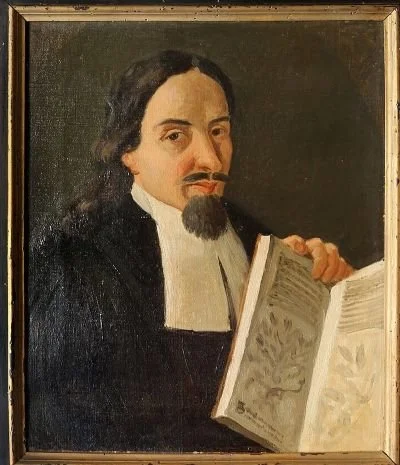
Fig.2 Luca Ghini (Toscaanse school, 19de e. Orto Botanico, Firenze).
In Firenze overleefden er nog enkele vormen van hoger onderwijs. In de Badia Fiorentina werd er in die periode filosofie gedoceerd door Francesco de’ Vieri, Grieks door Ciriaco Strozzi en klassieke letterkunde door Francesco Zeffi. Zij werden slecht of niet betaald (want Alessandro hield de geldkraan dicht), maar om een brain drain te voorkomen en uit intellectuele plichtsgetrouwheid bleven zij op post en dat werd door Alessandro’s opvolger achteraf beloond.
Pas in 1543 zorgde Cosimo I voor een herleving en reorganisatie van de Studio Pisano die zelfs een 2de stichting kan genoemd worden. In de Florentijnse Studio werden er ook nog steeds lessen gegeven, maar het zwaartepunt van het universitair gebeuren lag nu terug in Pisa.
De hertog zorgde voor aangepaste statuten, infrastructuur en financiering. Nieuwe leerstoelen (vooral in de medische en natuurwetenschappelijke opleidingen) werden opgericht en naar aloude traditie werden er ook gerenommeerde docenten aangetrokken. Cosimo wist Luca Ghini, professor in de plantkunde, in 1544 te laten overkomen vanuit Bologna (zie fig.2).
Ghini’s opvolger was Andrea Cesalpino die zelf ook in Pisa gestudeerd had. Andreas Vesalius die enkele weken in Pisa was komen lesgeven had een aanbod van 800 dukaten afgeslagen omdat hij hofarts van Karel V kon worden, maar Realdo Colombo (die in Padua student van Vesalius was geweest) werd bereid gevonden om in 1546 voor 600 dukaten anatomie te komen doceren. De filoloog (Latijn & Grieks) Piero Vettori die een leerstoel had aan de Studio kwam als lid van de Accademia Fiorentina ook nog lezingen geven over Griekse auteurs en Cicero. Hij kreeg een salaris van 300 scudi. De ducati d’oro en de scudi d’oro hadden toen ongeveer dezelfde waarde als de fiorini d’oro.
In 1546 had Cosimo de docent filosofie Silvio Porzio naar Pisa gehaald, maar toen die verdacht werd van Lutherse sympathieën werd hem het leven moeilijk gemaakt en in 1552 hield Porzio de eer aan zichzelf en vertrok naar Napels. Wegens het binnenbrengen van protestantse literatuur had Cosimo ook de filoloog Lorenzo Giacomini uit de Accademia Fiorentina gezet (zie art. Cosimo I en de Toscaanse protestanten).
In 1571 werd er voor Ignazio Danti een leerstoel wiskunde opgericht. Om het budget in evenwicht te houden werd de leerstoel theologie van Francesco Astudiglio in Firenze opgedoekt. Wiskunde was voor Cosimo belangrijker en er werd ook nog altijd theologie gedoceerd in Pisa.
Groothertog Francesco I zorgde niet voor grote vernieuwingen, maar behield de controle over de universiteit zoals blijkt uit zijn briefwisseling met rector Bonifazzio Vannozzi die al door Cosimo I in 1573 aangesteld was. De rector van de Studio Pisano, die zich bezig hield met juridische problemen, werd benoemd (en ontslagen) door de hertog (niet verkozen door docenten en/of studenten) en moest rechtstreeks bij hem rapporteren.
Ferdinando I de' Medici had in 1589 de jonge Galileo Galilei naar Pisa uitgenodigd en hem daar de leerstoel wiskunde gegeven, waarvoor bij het schamele bedrag van 60 scudi (of 50 fiorini d’oro) gekregen had.
Ferdinando’s zoon, Cosimo II de' Medici, liet de Pisaanse geleerde in 1610 overkomen naar Firenze (zie fig.3). Hij benoemde hem tot mathematicus en filosoof aan zijn hof en gaf hem bovendien een professoraat wiskunde aan de Universiteit van Pisa (met een salaris van 1.000 scudi) zonder dat Galileo daar nog hoefde te wonen of daadwerkelijk les te geven.
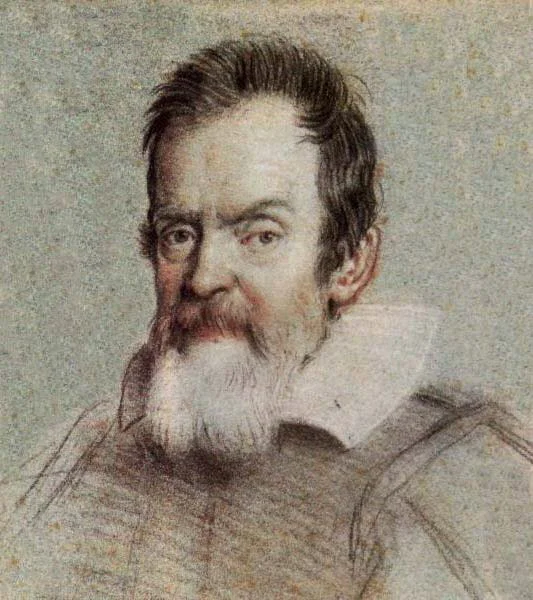
Fig.3 Galileo Galilei (Ottavio Leoni, 1624, Biblioteca Marucelliana Firenze )
De prinsen Ferdinando, Francesco en Giancarlo kregen privéles van Galilei in het Palazzo Pitti. Ook al in vroegere tijden hadden de Medici-zonen lessen bijgewoond van bekende docenten zonder ingeschreven te zijn geweest als reguliere studenten. Cosmo il Vecchio, zijn zoon Piero en kleinzoon Lorenzo volgden meestal de colleges van de studia humanitatis.
Tijdens de regering van Ferdinando II bleef de Studio van Pisa de “echte” universiteit, maar de wetenschappelijke vernieuwing verschoof geleidelijk aan van de universiteit naar de academies van Firenze. In 1656 liet de groothertog Giovanni Alfonso Borelli uit Messina overkomen om in Pisa wiskunde te gaan onderwijzen.
Cosimo III gaf de botanicus Pier Antonio Micheli, hoogleraar in Pisa, in 1718 de opdracht voor de herinrichting van de Florentijnse plantentuin (Orto dei Semplici).
Onder het bewind van de laatste groothertog Gian Gastone kon er zelfs sprake zijn van een academische heropleving. Pompei Neri kreeg in 1729 de leerstoel publiek recht en in 1730 benoemde de groothertog Francesco Gori tot hoogleraar in de gewijde en profane geschiedenis.
In hetzelfde jaar liet hij de arts en anatoom Antonio Cocchi uit Pisa naar Firenze overkomen om er aan de Studio theoretische geneeskunde te doceren. De leerstoel crimineel recht werd bezet door Alfonso di Galasso. Uit Cocchi’s intellectuele kring kwam ook Giulio Rucellai, professor burgerlijke instellingen in Pisa en door Gian Gastone als een soort van eerste minister aangesteld.
Ondanks al die verdienstelijke pogingen werd de “verouderde” Studio Fiorentino, die niet meer kon concurreren met de universiteit van Pisa, door de hertogen uit het Huis van Lorreinen in 1784 definitief gesloten.
JVL
Lo Studio Fiorentino and the significant interventions of the Medici (1405-1737)
The foundation of the university in Florence in 1321/49 was an initiative of the republican city council (see art. How lo Studio Fiorentino became a fully qualified university), but when the members of the de' Medici family took power in the following centuries, they also managed to control higher education.
Since 1385, the university had been run by the 8 ufficiali dello Studio (the administrators) and the first member of the bankers family, Giovanni di Bicci de' Medici, was part of it in 1404/5. The uffuciali who were appointed by the Signoria (the city council) were responsible for the logistical organization, the recruitment of the teachers and of course also for the finances. In this context, the ufficiali of 1404/5 had been forced to significantly reduce and even scrap the subsidy for the studio (which in previous years could amount to 1500 to 2,000 fl.) because of the war with Milan. This measure was the reason that the studio had to close its doors in 1407.
In 1413 the studio could restart with an endowment of 1500 fl. Cosimo (il Vecchio) became a member of the ufficiali for the academy years 1416/17 and 1421/22 in more favourable circumstances than his father. Since he had gradually become one of the richest and most powerful men in Florence, he no longer had to be a member of the 8 to make decisions concerning the Studio .
In 1425, for example, he had recruited Giovanni Aurispa to teach Greek, and in 1429 he had given Palla Strozzi (member of the ufficiali in 1428/29) his support in connection with the appointment of Francesco Filelfo who had come over from Bologna to lecture Greek and Latin literature and moral philosophy at the Florentine studia humanitatis (see fig.1). The studia humanitatis was the humanist curriculum that focused on grammar, rhetoric, poetry, history and moral philosophy, in which the study and interpretation of Greek and Latin classical texts was essential.
The haughty Filelfo was not very popular with his colleagues and in order to get rid of him they would even have been willing to have the salaries of all teachers reduced. However, that proposal was rejected and Filelfo remained in post and retained his annual salary of 300 fl. thanks to the support of Strozzi. But when he had sided with the latter in the conflict between Cosimo de' Medici and Rinaldo degli Abizzi, he was relieved of his chair in October 1431.
Cosimo's brother Lorenzo il Vecchio was one of the ufficiali, and the Signoria, who had to make the decision at the time, was led by Agnolo Pandolfini, a supporter of the Medici faction. So the academic conflict had become a political conflict.
After his reappointment in 1433, Filelfo continued to oppose Cosimo and when the latter returned from exile in 1434, Filelfo was exiled together with Rinaldo degli Albizzi and Palla Strozzi (see art. Cosimo de' Medici's banishment and return (1433-34).
Filelfo found refuge in Siena and Carlo Marsuppini, a good friend of the Medici, who had already temporarily replaced Filelfo in 1431 (with a reasonable salary of 150 fl.) became the most important teacher of the Studio in 1434 . In 1444 he became chancellor of the Republic of Florence.
When the Florentine physician Galileo Bonaiuti was asked to come and teach medicine at the Studio Fiorentino, it was most likely at the insistence of Cosimo de' Medici. In 1446 Galileo even became gonfaloniere of the Signoria and the fact that he had been ufficiale in 1430 during the period of the problems with Filelfo, may not have been strange to this. One of Galileo's descendants was the famous mathematician and astronomer Galileo Galilei.
It is very remarkable that Cosimo had not supported the plan of the politician and banker Niccoló Uzzano to build in 1429 a Casa della Sapienza, a residence for 50 students, on Piazza San Marco (see city map). He claimed to be afraid of nuisance in his neighbourhood (Palazzo Medici was not far away in the Via Larga, now Via Cavour), but probably political motives were the cause of this. After all, Uzzano was a good friend of Strozzi and Cosimo did not give his rivals the honour of scoring with this initiative. The project was never fully realized, but the current rectorate (in Piazza San Marco) is located on the site where the construction of the Sapienza was planned.
Lorenzo il Vecchio de' Medici, Cosimo's brother, who had already been a member of the ufficiali in 1431/32, rejoined the committee in 1434/35, together with the Medici supporters Niccoló Piccoli and Alamanno Salviati, when Cosimo definitely seized power. Lorenzo's next membership in 1436/37 and that of Giovanni, Cosimo's youngest son in 1437/38, was a logical consequence.
Piero il Gottoso, Cosimo's eldest son, who had succeeded his father as head of the bank, the family and the republic, was a member of the ufficiali in 1445/46, 1455/56 and 1458/61. During his 2nd term, the number of ufficiali was reduced to 5 and they were now appointed for 3 years. Together with his political friends Luigi di Piero Guicciardini, Franco di Niccolò Sacchetti, Luigi di Lorenzo Ridolfi and Otto Niccolini, Piero had complete control over the Studio. In fact, he personally appointed the teachers. When Marsuppini died in 1455, his chair (Greek, philosophy, rhetoric and poetry) was occupied by Johannes Argyropoulos (who arrived from Constantinople), Francesco da Castiglione and Cristoforo Landino. The latter received his permanent appointment in 1458.
In the same year, however, Girolamo d'Agnolo Machiavelli (an uncle of Niccoló’s), who had studied at the studio himself and had been teaching civil law there since 1450, was arrested on suspicion of conspiring against the Medici (see art. Girolamo Machiavelli and the electoral fraud of Cosimo de' Medici).
Carlo de' Medici, Cosimo's natural son, is known to have been a member of the examination board for civil law during the academic year 1468/69.
Piero's son Lorenzo il Magnifico is known to have been a member of the ufficiali several times between 1473 and 1486. In 1473 he was a member of the quintet when the very important decision was made for Studio Fiorentino to collaborate with Studio Pisano (the University of Pisa). This had already been a topic of discussion in 1460, when the question was asked whether such an operation was financially advantageous or unfavourable for Florence. Piero de' Medici did not want to make the decision at the time, but Lorenzo did so in 1473.
According to some, he would have done this to limit the nuisance of the students, but that is the rather weak argument that his grandfather had already used in 1429. Apparently Il Magnifico would have wanted to help the city of Pisa get back on its feet economically and increase its prestige by reviving its Studio, which already existed from 1343.
The studium generale of Pisa was therefore older than that of Florence and with the establishment of the new Studio Fiorentino & Pisano, the institution became a creation of the Medici. Financially, there was the income of the attracted students, but an investment was also needed. So Lorenzo provided an endowment of 6,000 fl. and had also obtained that the pope, Sixtus IV, had given the city republic permission to levy an ecclesiastical tax on the Florentine clergy that could bring in 5,000 fl. .
The main focus of university studies was in Pisa but in the Studio Fiorentino il Magnifico had created an intellectual circle of “gleichgestimmte Seelen”.
The learning areas of the Studio that aligned closely with his own humanist vision such as poetry and rhetoric/ Greek/ grammar and Latin texts, were preserved in Florence and taught by eminent people such as Cristoforo Landino, Giovanni Argiropulo and his successors Andronico Callisto and Demetrio C(h)alcondila, Marsilio Ficino and Agnolo Poliziano. The latter had been appointed by Lorenzo himself in 1480 to assist Landino.
Landino was the perfect example of the teacher, who could give young men a humanistic education that then gave them a connection with the Medici regime as members of the Florentine elite. He continued to teach until 1497 (see art. Girolamo Savonarola and the humanists of the Studio Fiorentino). Since no degrees and diplomas were awarded in Florence, many teachers (such as Landino and Poliziano) were not university graduates themself, but personal friends of the Medici.
In Pisa, il Magnifico had given Lorenzo Lippi da Colle (a member of the Neoplatonic Academy) the chair of literature in 1473, for which he thanked him extensively in his speech at the opening of the academic year. In the same year, Oliviero Arduini, who was also Lorenzo ‘s envoy to steal professors from other universities, was given a professorship in philosophy. His most famous pupil in 1491/92 was Francesco Cattani da Diacetto, the Florentine scolar who, following the example of Pico della Mirandola, wanted to harmonize the philosophy of Plato and Aristotle.
When in 1476 there was some hesitation about the extending of Bartolommeo da Pratovecchio’s teaching assignment (poetry and rhetoric) in Pisa, il Magnifico personally intervened to arrange this for him.
Lorenzo also appointed his brother-in-law Bernardo Rucellai, who had already been a member of the ufficiali in 1478, in October 1480 as a member of the commission in Pisa that had to deal with the administrative reforms and the composition of the teaching corps. So the education was largely in Pisa, but the control was done from the Palazzo Medici in Florence. In 1486, il Magnifico had the Palazzo della Sapienza built in Pisa, where the headquarters of the Faculty of Law is still located today.
After the exile of Lorenzo's sons in 1494 , the war with Pisa had caused the scattering of the university over emergency locations in Florence, Prato and Pistoia. When they returned to Florence, the Medici immediately wanted to use the university as an instrument for political prestige and stability and thanks to the financial support of Giovanni de' Medici (Pope Leo X) the Studio could start again in Pisa.
Giulio de' Medici, then still a cardinal, arranged for the festive reopening of the Studio in Pisa in 1515, where the different faculties were centralized again. A financial reform was carried out in which the university's income was directly linked to the excise duties on wine. The cardinal attracted top lawyers, such as Filippo Decio, who were brought in with a gigantic salary. But when Giulio de' Medici became Pope Clement VII and Alessandro de' Medici (his incompetent natural son) received the duke's crown of Florence, things went wrong again and a new closure followed in 1535.
In Florence a few forms of higher education did survive. Philosophy was taught in the Badia Fiorentina by Francesco de' Vieri, Greek by Ciriaco Strozzi and classical literature by Francesco Zeffi. They were poorly paid or not at all (because Alessandro kept the money tap closed), but to prevent a brain drain and out of intellectual dutifulness they remained in post and that was rewarded afterwards by Alessandro's successor from the Popolani branch.
It was not until 1543 that Cosimo I reorganized the Studio Pisano, which can even be considered as a 2nd foundation. Lessons were still given in the Florentine Studio, but the main focus of the university activities was now back in Pisa.
The duke provided new statutes, infrastructure and financing. New chairs (especially in medical and natural sciences) were established and, in accordance with old traditions, famous lecturers from elsewhere were attracted. Cosimo managed to have Luca Ghini, professor of botany, come over from Bologna in 1544 (see fig.2).
Ghini's successor was Andrea Cesalpino who had also studied in Pisa. Andreas Vesalius, who had come to teach in Pisa for a few weeks, had declined an offer of 800 ducats because he could become court physician to Charles V, but Realdo Colombo (who had been a student of Vesalius in Padua) was willing to come and teach anatomy in 1546 for 600 ducats. The philologist (Latin & Greek) Piero Vettori, who held a chair at the Studio, also came as a member of the Accademia Fiorentina and gave lectures on Greek authors and Cicero. He received a salary of 300 scudi. The ducati d'oro and the scudi d'oro had about the same value as the fiorini d'oro at that time.
In 1546 Cosimo had brought the philosophy teacher Silvio Porzio to Pisa, but when the latter was suspected of Lutheran sympathies, life was made difficult for him and in 1552 Porzio decided to leave for Naples. Because of the introduction of protestant literature, Cosimo had also expelled the philologist Lorenzo Giacomini from the Accademia Fiorentina (see art. Cosimo I and the Tuscan protestants).
In 1571, a chair of mathematics was established for Ignazio Danti and in order to keep the budget in balance, the chair of theology of Francesco Astudiglio in Florence was abolished. Mathematics were more important to Cosimo and after all there were still a few theology teachers in Pisa.
Grand Duke Francesco I did not bring about any innovations, but retained control of the university, as evidenced by his correspondence with rector Bonifazzio Vannozzi, already installed by Cosimo I in 1573. The rector of the Studio Pisano, who dealt with legal issues, was directly appointed (and dismissed) by the Duke (and not elected by teachers and/or students) and had to report personally to him.
Ferdinando I de' Medici had invited the young Galileo Galilei to Pisa in 1589 and given him the chair of mathematics, for which he had received the paltry sum of 60 scudi (or 50 fiorini d'oro).
But Ferdinando's son, Cosimo II de' Medici, had the Pisan scholar come to Florence in 1610 (see fig.3). He appointed him as his court mathematician and philosopher and also gave him a professorship of mathematics at the University of Pisa (with a salary of 1,000 scudi) without Galileo having to live there or actually teach.
The princes Ferdinando, Francesco and Giancarlo received private lessons from Galileo in the Palazzo Pitti. Even in earlier times, the Medici sons had attended lessons by well-known teachers without having been enrolled as regular students. Cosmo il Vecchio, his son Piero and grandson Lorenzo had mostly taken courses in the studia humanitatis.
Under the rule of Ferdinando II, the Studio of Pisa remained the “real” university, but scientific innovation gradually shifted from the university to the academies of Florence. In 1656, the Grand Duke had invited Giovanni Alfonso Borelli from Messina to teach mathematics in Pisa.
In 1718, Cosimo III commissioned the botanist Pier Antonio Micheli, professor in Pisa, to redesign the Florentine Botanical Garden (Orto dei Semplici).
During the government of the last Grand Duke Gian Gastone one could even speak about an academic revival. Pompei Neri received the chair of public law in 1729 and in 1730 the Grand Duke appointed Francesco Gori professor of sacred and profane history.
In the same year, he had the physician and anatomist Antonio Cocchi transferred from Pisa to Florence to teach theoretical medicine at the Studio. The chair of criminal law was occupied by Alfonso di Galasso. From Cocchi's intellectual circle came Giulio Rucellai, professor of civil institutions in Pisa and appointed by Gian Gastone as a kind of prime minister.
Despite all these meritorious attempts, the “outdated” Studio Fiorentino, which could no longer compete with the university of Pisa, was permanently closed by the dukes of the House of Lorraine in 1784.
Literatuur:
Baldini, U. Galilei, Galileo. In: Dizionario Biografico vol. 51 (1998).
Ciranni, R. Andreas Vesalius nello Studio Pisano di Cosimo I de’ Medici.
In: Athenet online, nr. 29 (juli 2009).
Davies, J. Florence and its University during the Early Renaissance. Leiden, 1998.
Meschini, F. Ghini, Luca. In: Dizionario Biografico, vol.53 (2000).
Van Laerhoven, J. zie art. Hoe lo Studio Fiorentino een volwaardige universiteit werd.
zie art. Cosimo de’ Medici’s verbanning en terugkeer (1433-34).
zie art. Cosimo I en de Toscaanse protestanten.
zie art. Girolamo Machiavelli en de verkiezingsfraude van Cosimo de’ Medici.
zie art. Girolamo Savonarola en de humanisten van de Studio Fiorentino
Verde, A. Lo Studio Fiorentino (1473-1503). Firenze, 5 volumes, 1973 e.v.
Verga. M. Firenze e l’Università. Passato, presente e futuro
Vitti, P. Filelfo, Francesco. In: Dizionario Biografico, vol.47 (1997).