Baccio Valori, van winnaar in Firenze tot verliezer in Montemurlo
Baccio Valori, van winnaar in Firenze tot verliezer in Montemurlo
Bartolommeo (Baccio) Valori was een lid van de roemrijke en adellijke Florentijnse familie en in 1530 één van de belangrijkste mannen in Italië. Hij was de op 5 december 1477 geboren zoon van Filippo Valori en Alessandra Salviati. Wat en waar hij gestudeerd heeft is niet geweten, maar in de beginjaren van het Cinquecento behoorde hij tot de intellectuele kring van Florentijnse humanisten. Terwijl zijn grootoom Francesco di Filippo Valori nog een piagnone, een fervente aanhanger van fra Savonarola geweest was en tijdens diens arrestatie in april 1498 gedood werd, had Baccio zich tijdens de volgende jaren van de republiek aangesloten bij de factie van de palleschi, die een terugkeer van de Medici steunden en het regime van Piero Soderini beu waren (zie art. Francesco Valori en de Savonaroliaanse beweging).
Baccio was in navolging van zijn vader Filippo en oom Niccolò verscheidene keren lid geweest van de Tre Maggiori (1).
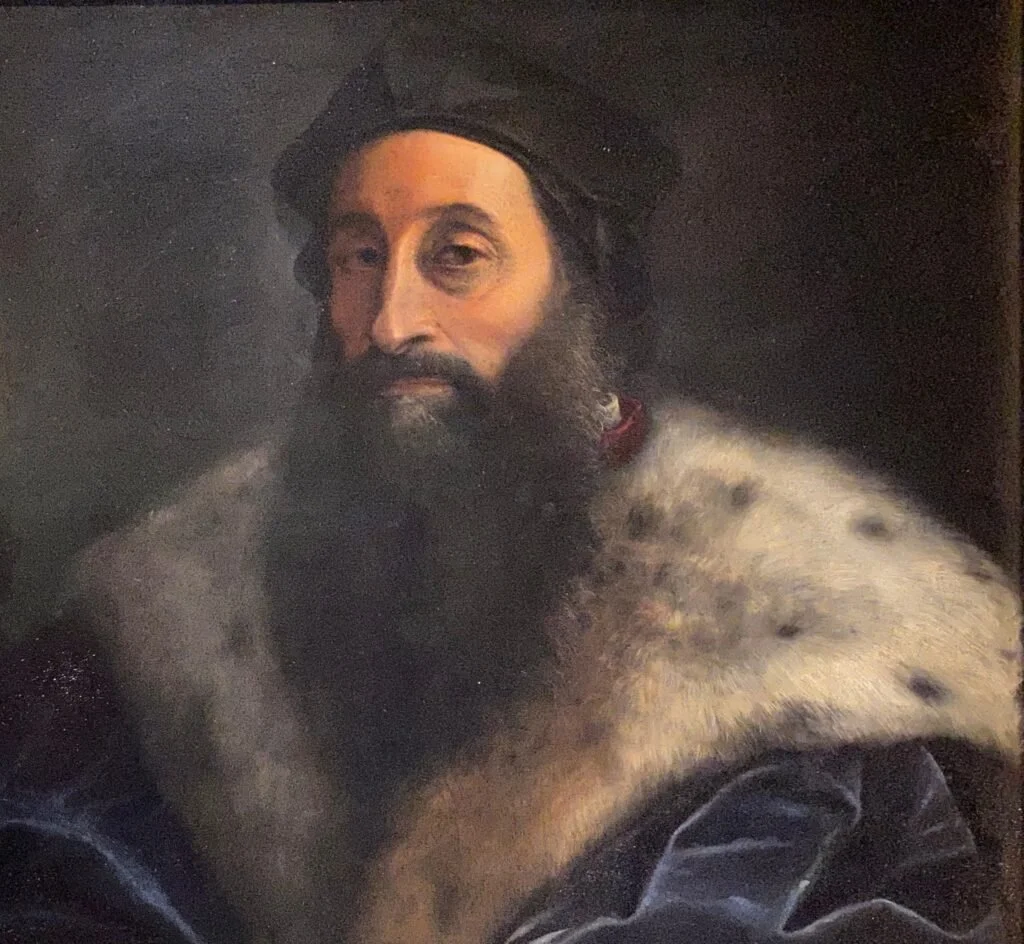
Fig.1 Baccio Valori (S.del Piombo, Galleria Palatina, Firenze).
Tussen 1530 en 1535 heeft de Venetiaan Sebastiano del Piombo een portret geschilderd van Valori, die toen zijn gloriejaren kende ( zie fig.1).
Toen de troepen van kardinaal Giovanni de’ Medici eind augustus 1512 Prato bezet en geplunderd hadden en dreigden naar Firenze te marcheren was Baccio, samen met een aantal andere Medici-aanhangers (Benedetto Buondelmonti, Francesco Nori, Paolo Vettori, Maso en Antonfrancesco degli Albizzi) op 1 september naar het Palazzo Vecchio getrokken om daar het ontslag te eisen van gonfaloniere a vita Piero Soderini, (zie art. Piero Soderini, staatsman of simpele geest?) die al 10 jaar het bewind voerde in de republiek (2).
Enkele dagen later deden de Medici-broers (Giovanni en Giuliano) hun intrede in de stad en werd er naar aloude republikeinse gewoonte een parlamento (een volksraadpleging) op de Piazza della Signoria bijeengeroepen die de goedkeuring gaf voor de vorming van een 48-koppige Balía. Tot die urgentieraad behoorden toen o.a. Averardo di Bernadetto de’ Medici en Francesco Vettori, maar Valori’s naam ontbreekt op de lijst (zie Ricordanze di B.Masi).
Uit die groep werden er dan op 28 september voor een termijn van 6 maanden 12 procuratori gekozen die voor de hervorming van de staatsinstellingen moesten zorgen en werden er 20 accoppiatori (5 per stadsdeel) aangeduid die tot 19 oktober tijd kregen om de nieuwe magistraten te verkiezen. Bij de 20 kiesmannen waren vooral Giuliano de’ Medici en Guglielmo de’ Pazzi de opvallendste namen.
Eind 1512 was Baccio Valori samen met bisschop Matthäus Lang von Wellenburg (diplomaat in dienst van keizer Maximiliaan) op missie in Milaan waar de nieuwe hertog Massimiliano Sforza werd geïnstalleerd. Toen hij in februari van het volgende jaar terugkeerde naar Firenze geraakte hij in een moeilijk parket omdat zijn oom Niccolò di Bartolommeo Valori gearresteerd was in verband met de samenzwering van Boscoli (waar ook Niccolò Machiavelli zou bij betrokken geweest zijn), maar hij had daar klaarblijkelijk niets mee te maken en men kon hem dus ook niets ten laste leggen.
Hij bleef actief in het Florentijnse stadsbestuur en in maart 1514 werd Baccio samen met Luigi Guicciardini lid van de Balía, die na 1512 steeds verlengd en uitgebreid werd (tot 260 leden) en die de organisatie van het regime moest bewerkstelligen.
In mei 1515 mocht hij Lorenzo de’ Medici il Giovane, die zijn oom Giuliano opvolgde als nieuwe machthebber van Firenze, feliciteren met zijn aanstelling tot capitano (bevelhebber) van de republiek.
Baccio had ook intens meegewerkt aan de voorbereidingen voor de feestelijke intocht van de 1ste Medici-paus Leo X (Giovanni de’ Medici) op 30 november 1515.
In maart 1525 was hij weer naar Milaan gestuurd om er besprekingen te voeren met Charles de Lannoy, de vice-koning van Napels en de overwinnaar van de Slag bij Pavia.
Wanneer er in april 1527 met het Vrijdag-Tumult een opstand dreigde tegen de jonge Medici Ippolito en Alessandro, die door de 2de Medici-paus Clemens VII (Giulio de’ Medici) naar Firenze gezonden waren, gaf Valori hun tutor kardinaal Silvio Passerini het dringende advies om een aantal Medici-tegenstanders uit voorzorg te laten arresteren (3). Dat gebeurde evenwel niet en op 16 mei (8 dagen na de plundering van Rome) moesten de Medici voor de 2de keer de wijk nemen. (zie art. Het Vrijdag-tumult en de 3de Florentijnse republiek 1527-1530).
Baccio werd door het revolutionaire Florentijnse stadsbestuur tot rebel verklaard, maar door Clemens VII aangesteld tot commissaris-generaal van het pontificale leger dat onder leiding van Philibert de Chalon, de Prins van Oranje, moest oprukken naar Firenze om de stad terug onder Medici-heerschappij te brengen. Als commissaris moest hij zich ook bezig houden met de financiering van het leger, dat van ca.11.000 manschappen in oktober 1529 uitgegroeid was tot ca. 30.000 in februari 1530.
De Chalon moet geen hoge dunk van Valori gehad hebben want toen zij samen vanop de heuvel van Arcetri de fortificaties van Firenze in oktober 1529 aan het bekijken waren en Baccio meer inside informatie wilde geven over de verdediging, zou de prins hem geantwoord hebben dat hij van een geboren Florentijn (zoals Valori) eerder zou verwachten dat die zijn stad tot het uiterste zou verdedigen in plaats van ze over te leveren aan de belegeraars. Oranje kon blijkbaar niet goed begrijpen dat Baccio zijn loyaliteit aan de paus belangrijker vond dan die aan zijn geboortestad, die hij (toen nog) graag onder Medici-bestuur wilde zien (4).
Na een belegering van 11 maanden moesten de Florentijnen zich uiteindelijk op 12 augustus 1530 overgeven en werd Valori de plenipotente vertegenwoordiger van Zijne Heiligheid in Firenze.
Vlak na de overgave was hij op 20 augustus 1530 op de Piazza della Signoria verschenen met een gewapende escorte en een aantal Medici-getrouwen en had hij de klok van het Palazzo Vecchio doen luiden om weer een parlamento bijeen te roepen. Nadat kanselier Salvestro Aldobrandini driemaal met luide stem aan de aanwezigen gevraagd had of zij akkoord gingen met de vorming van een nieuwe Balía kregen 12 mannen de bevoegdheid om de terugkeer van de Medici te institutionaliseren. Naast die van Baccio Valori waren de bekendste namen die van Ottaviano de’ Medici, Luigi della Stufa en Filippo Machiavelli. Die Balia werd daarna nog uitgebreid tot 43 en 144 leden (zie lijst N.Scott-Baker).
Vanuit het Palazzo Medici, waar hij zijn intrek genomen had, dirigeerde Valori ook de opsporing en arrestatie van de republikeinse leiders. Eén van die leiders was niemand minder dan de kunstenaar Michelangelo Buonarroti die aan het hoofd van de fortificatiewerken van de stad had gestaan. Michelangelo had zich een tijd lang schuil gehouden, maar Baccio had hem (in naam van de paus) amnestie beloofd wanneer hij zich zou melden (zie art. Michelangelo’s geheime schuilplaats in de basiliek van San Lorenzo).
Michelangelo kreeg van Clemens VII de opdracht om de Nieuwe Sacristie van de San Lorenzo af te werken en volgens Vasari had hij aan Baccio een beeld geschonken om hem gunstig te stemmen en om hem te bedanken voor de gekregen amnestie. Dat beeld is de fameuze Apollo die bewaard wordt in het Bargello-museum (zie art. Waarom Michelangelo’s non-fini-techniek een bewuste artistieke keuze was).
Baccio Valori maakte sedert 26 september 1530 ook nog deel uit van de opnieuw samengestelde Otto di Pratica, het bestuursorgaan dat ook de nieuwe leden van de Balia selecteerde (5). Hij was toen met voorsprong de belangrijkste man in de stad en zijn eigenmachtig optreden lokte onvermijdelijk kritiek en weerstand uit.
Francesco Guicciardini en Francesco Vettori, nota bene 2 prominente leden van diezelfde Otto di Pratica, hadden zich reeds in november 1530 beklaagd bij de paus over het feit dat Valori zich schuldig maakte aan machtsmisbruik en corruptie. Clemens VII reageerde echter op die aantijgingen door Baccio weg te promoveren naar de Romagna waar hij als pauselijk vertegenwoordiger werd aangesteld en zich aanzienlijk kon verrijken. Zijn functie als gouverneur van Firenze werd overgenomen door Nicolaas von Schomberg, de aartsbisschop van Capua.
Valori’s politieke rol in Firenze was echter nog niet uitgespeeld want toen hertog Alessandro de’ Medici in 1532 het bewind overnam werd hij één van diens raadsheren en kreeg hij toegang tot de nieuw opgerichte Senaat van 48.
Op 4 april 1532 was er een commissie van 12 riformatori in het leven geroepen die volledige bevoegdheid kreeg om de staat te hervormen. Samen met o.a. Roberto Acciauoli en Palla Rucellai behoorde Valori tot dit selecte gezelschap (zie lijst M.Chimenti).
Op 27 april 1532 hadden zij een soort van constitutie opgesteld waarbij de oude republikeinse instellingen (zoals de Signoria en de Gran Consiglio) werden afgeschaft. Clemens VII had de Florentijnen kunnen overtuigen om een compromis te aanvaarden tussen het oude republikeinse systeem en een nieuwe bestuursvorm waarbij zijn natuurlijke zoon Alessandro il Moro (met de steun van de keizer) aan het hoofd van de staat geplaatst werd.
Door het tiranniek optreden van Alessandro begonnen Baccio’s Medici-sympathieën echter stilaan af te nemen en, hoewel hij niets met de misdaad te maken had, was hij er ook niet rouwig om toen de hertog op 6 januari 1537 vermoord werd. Valori keerde zich nu volledig tegen de Medici en hij stond ook zeer wantrouwig tegenover het plan om Cosimo de’ Medici uit de andere tak als nieuwe hertog naar voor te schuiven.
Hij schaarde zich zelfs aan de kant van de republikeinse bannelingen (de fuorusciti) , die toen onder leiding stonden van Filippo Strozzi, de man die hij nog had willen laten arresteren in april 1527 en die achteraf in ballingschap gestuurd was door hertog Alessandro.
Strozzi stond aanvankelijk echter niet vijandig tegenover de jonge Cosimo, wanneer die door Francesco Guicciardini, Roberto Acciaiuoli, Francesco Vettori, Rafaello de’ Medici e.a. op 9 januari 1537 aan de Senaat werd voorgedragen als opvolger van Alessandro. Maar op 20 januari berichtte Baccio aan Strozzi dat de anti-Medici kardinalen Giovanni Salviati, Niccolò Ridolfi en Niccolò Gaddi, die met Cosimo waren gaan onderhandelen over het nieuwe bestuur en bepaalde concessies eisten (o.a. in verband met amnestie voor de bannelingen), van een kale reis waren teruggekomen.
Valori moet toen al beseft hebben dat Cosimo niet de volgzame knaap was waarvan Guicciardini en de anderen dachten dat hij gemakkelijk te manipuleren zou zijn. In dat verband zou de beeldhouwer Benvenuto Cellini gezegd hebben dat “men een jonge man de teugels van een vurig paard in handen had gegeven, zonder te weten of hij daarna zelf nog te beteugelen zou zijn…”.
Bovendien kon Cosimo rekenen op de Spaanse troepen van keizer Karel om hem in het zadel te houden.
Baccio Valori en zijn republikeinse compagnon van het eerste uur, Antonfrancesco degli Albizzi, konden Strozzi er van overtuigen om met het leger van de fuorusciti (dat door Filippo gefinancierd werd en door zijn zoon Piero en Bernardo Salviati werd aangevoerd) een militaire confrontatie aan te gaan met de troepen van hertog Cosimo.
Niccolò Bracciolini, een partijganger van de Pistoiese Panciatichi (die Cosimo goed gezind waren), had Filippo Strozzi tijdens een voorafgaande ontmoeting in Venetië wijs gemaakt dat Pistoia aan de zijde van de rebellen stond en een prima uitvalsbasis kon vormen voor het rebellenleger dat de steun zou krijgen van de plaatselijke partij der Cancellieri (zie art. Cancellieri en Panciatichi in Pistoia). Strozzi trapte in de val en in juli 1537 vielen de rebellen vanuit Mirandola en Bologna Toscane binnen.
Het was de bedoeling om het leger dan in Montemurlo (in de buurt van Pistoia) op te stellen om zo ook het nabijgelegen Prato aan hun kant te krijgen en in Firenze een opstand te ontketenen tegen Cosimo. Baccio zal daarbij ongetwijfeld gedacht hebben aan de gebeurtenissen in Prato van 1512.
Aangezien het rebellenleger weinig of geen tegenstand ondervonden had onderweg waren Valori, Albizzi en Filippo Strozzi in hun ongeduld al met een groep van 80 soldaten vooruit gereden naar Montemurlo, waar zij allebei een landgoed hadden, om er te wachten op de hoofdmacht van hun leger. Zij waren al enkele dagen ter plaatse toen op 31 juli het eerste deel van het leger (ca. 800 man onder leiding van Piero Strozzi) er zijn tenten kwam opslaan. Maar zij werden in de volgende nacht compleet verrast en in de pan gehakt door de voorhoede van het leger van Cosimo, die werd aangevoerd door Alessandro Vitelli, Pirro Colonna, Ridolfo Baglioni en Federigo Montauto.
Vitelli had van zijn spionnen (o.a. van zijn neef Niccolò Bracciolini) vernomen dat slechts een deel van het rebellenleger ter plaatse was en hij was meteen met ca. 1.700 soldaten (Duitse en Spaanse huurlingen en leden van de milities) richting Montemurlo gemarcheerd.
Filippo Strozzi, Albizzi en Valori zochten hun heil in de Rocca van Montemurlo, maar werden na een kort en hevig gevecht, waarbij de aanvallers de hoofdpoort van het fort in brand gestoken hadden, in hechtenis genomen. Piero Strozzi kon ontsnappen.
Alessandro Vitelli besloot niet te wachten op de rest van het hertogelijk leger (dat in totaal naar schatting zo’n 3.000 manschappen telde) en deed op 2 augustus met de gevangen kopstukken van de revolte zijn triomfantelijke intrede in Firenze. Ondertussen was het gros van het rebellenleger (ca. 3.500 man) onder leiding van Bernardo Salviati, de broer van kardinaal Giovanni, in Montemurlo verschenen. Hij was opgehouden door zware regenval en aangezien hij toch te laat was en Vitelli niet meer kon inhalen, besloot hij om zijn troepen terug te trekken (6). Ondanks het feit dat het slechts om een beperkt militair treffen ging was Cosimo als de grote overwinnaar uit de strijd gekomen en op 30 september kreeg hij van keizer Karel V zijn officiële benoeming van erfelijk hertog.
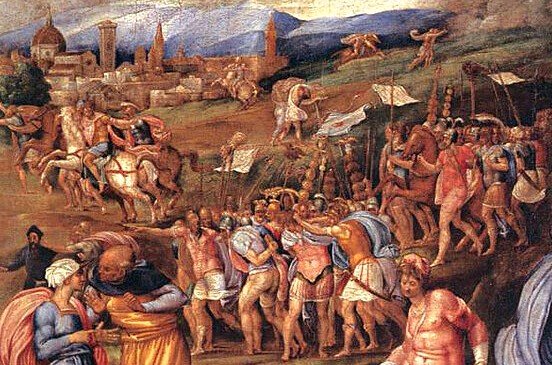
Fig.2 Ganymedes en de Slag bij Montemurlo (B. Franco, 1537-41, Galleria Palatina Firenze)
De zuil die herinnert aan de Slag bij Montemurlo staat in Firenze bekend als de Colonna della Giustizia (de Zuil van de Gerechtigheid) en staat centraal op de Piazza Santa Trinita in het historische centrum van de stad.
Op het schilderij van Battista Franco Veneziano (zie fig.2) met “De ontvoering van Ganymedes of de Slag bij Montemurlo” is te zien hoe een groepje rebellen met Valori en Strozzi gevankelijk wordt afgevoerd naar Firenze (7).
Terwijl Filippo Strozzi werd opgesloten werden op 20 augustus Baccio Valori, zijn zoon Filippo, Filippo di Niccolò Valori (zijn neef), Antonfrancesco degli Albizzi en Alessandro (of Alamanno) Rondinelli op de binnenkoer van de Bargello-gevangenis onthoofd.
De bezittingen van de Valori werden geconfisqueerd en Baccio’s andere zoon Paolantonio werd lange tijd opgesloten in Volterra. Diens schoonvader Filippo Strozzi pleegde in 1538 zelfmoord (?) in het Fortezza da Basso (zie art. De dood van Filippo Strozzi; moord of zelfmoord?).
Maar “eind goed al goed” voor de Valori want in 1580 werden ze gerevaloriseerd toen Baccio di Filippo II de Jonge (de zoon van de neef van Baccio en de bekende literator) terug in de gratie van de Medici opgenomen werd en senator benoemd.
(1) Francesco di Filippo was prior geweest in 1471 en 1478 en gonfaloniere di giustizia in 1484,1489,1493 en 1497. Filippo di Bartolomeo (Baccio’s vader) was tussen 1483 en 1490 gekozen als prior en lid van de dodici en de sedici. Niccolò di Bartolomeo (Baccio’s oom) was tussen 1498 en 1512 prior en lid van de dodici en sedici geweest.
Baccio zelf was na de terugkeer van de Medici in 1513 lid van de sedici, in 1521 prior en in 1524 gonfaloniere di giustizia geworden. Tijdens zijn gonfalonaat (mei/juni) arriveerde Ippolito de’ Medici in Firenze.
(2) Baccio Valori was nochtans in 1500 getrouwd met Dianora di Paolantonio Soderini, een nicht van gonfaloniere Piero, die toen nog geen gonfaloniere a vita was.
3) Marietta de’ Ricci schrijft dat Valori de arrestatie van Niccolò Capponi en Filippo Strozzi had aanbevolen.
(4) De’ Ricci vermeldt de anekdote in haar relaas over het beleg van Firenze.
Philibert de Chalon sneuvelde enkele dagen vóór de overgave op 3 augustus 1530 bij de Slag in Gavinana.
5) De Otto di Pratica (de 8 van de praktijk) die zich vooral met militaire en diplomatieke zaken bezig hielden, waren in 1480 opgericht, in 1494 afgeschaft, in 1512 terug ingesteld, in 1527 weer opgeheven en in 1530 opnieuw samengesteld. Zij mogen niet verward worden met de Otto di Guardia (het politioneel apparaat).
Hertog Cosimo liet de Otto di Pratica in 1560 definitief vervangen door de Nove Conservatori del contado e del dominio fiorentino.
(6) Over de troepensterkte is er geen zekerheid. Maar dat het leger van Cosimo in Montemurlo over 10.000 soldaten zou beschikt hebben is zwaar overdreven. Sommige bronnen spreken van een strijdmacht van 3.000 soldaten, die het kamp van Strozzi hadden aangevallen. Andere bronnen vermelden dat Vitelli slechts met 800 man (700 piekeniers en 100 ruiters) de verrassingsaanval zou uitgevoerd hebben.
(7) Het schilderij is een politieke allegorie. Ganymedes, die door Zeus (keizer Karel?) naar de hemel gehaald wordt, zou de jonge Cosimo kunnen zijn, die tot een bijna goddelijke status wordt verheven. Door zijn overwinning te Montemurlo wordt hij de onbetwiste wettelijke heerser van Firenze.
JVL
Baccio Valori, from hero in Florence to zero in Montemurlo
Bartolommeo (Baccio) Valori was a member of the glorious and noble Florentine family and in 1530 one of the most important men in Italy. He was the son of Filippo Valori and Alessandra Salviati, born on December 5, 1477. What and where he studied is not known, but in the early years of the Cinquecento he belonged to the intellectual circle of Florentine humanists. While his great-uncle Francesco di Filippo Valori had been a piagnone, a fervent supporter of fra Savonarola and killed during his arrest in April 1498, Baccio had joined during the following years of the republic the faction of the palleschi, who supported a return of the Medici and were tired of the regime of Piero Soderini (see art. Francesco Valori and the Savonarolian movement).
Following in the footsteps of his father Filippo and uncle Niccolò, Baccio had been a member of the Tre Maggiori several times (1).
Between 1530 and 1535, the Venetian Sebastiano del Piombo painted a portrait of Valori, who was then in his glory years ( see fig.1).
When Cardinal Giovanni de' Medici's troops had occupied and sacked Prato at the end of August 1512 and threatened to attack Florence, Baccio, together with a number of other Medici supporters (Benedetto Buondelmonti, Francesco Nori, Paolo Vettori, Maso and Antonfrancesco degli Albizzi) had marched to the Palazzo Vecchio on September 1st to demand the resignation of gonfaloniere a vita Piero Soderini, (see art. Piero Soderini, statesman or simple mind?) who had been in power in the republic for 10 years (2).
A few days later, the Medici brothers (Giovanni and Giuliano) entered the city and, according to republican customs, a parlamento (a plebiscite) was convened in the Piazza della Signoria that approved the formation of a 48-member Balía. This urgency council then included a.o. Averardo di Bernadetto de' Medici and Francesco Vettori, but Valori's name is not on the list (see Ricordanze di B.Masi).
On September 28, 12 procuratori were chosen from this group for a term of 6 months with the task to reform the state institutions, and 20 accoppiatori (5 per district) were appointed to elect the new magistrates. Among these 20 electors, Giuliano de' Medici and Guglielmo de' Pazzi were the most striking names.
At the end of 1512, Baccio Valori was assisting bishop Matthäus Lang von Wellenburg (diplomat in the service of Emperor Maximilian), with a mission in Milan, where the new Duke Massimiliano Sforza was installed. When he returned to Florence in February of the following year, he found himself in a difficult position because his uncle Niccolò di Bartolommeo Valori had been arrested in connection with the Boscoli conspiracy (in which Niccolò Machiavelli is also said to have been involved), but he apparently had nothing to do with it and therefore could not be charged with anything.
He remained active in the Florentine city council and in March 1514, together with Luigi Guicciardini, he became a member of the Balía, which was extended and expanded after 1512 (to 260 members) and which was to determine the organization of the regime.
In May 1515, Valori was able to congratulate Lorenzo de' Medici il Giovane, who succeeded his uncle Giuliano as the new ruler of Florence, on his appointment as capitano (commander) of the republic.
Baccio had also participated intensively in the preparations for the glorious entry of the 1st Medici pope Leo X (Giovanni de' Medici) in Florence on November 30, 1515.
In March 1525 he was back in Milan to hold talks with Charles de Lannoy, the viceroy of Naples and the victor of the Battle of Pavia.
When in April 1527 the Friday Tumult was the prelude for a revolt against the young Medici Ippolito and Alessandro, who had been sent to Florence by the 2nd Medici pope Clement VII (Giulio de' Medici), Valori urgently advised their tutor Cardinal Silvio Passerini to have a number of Medici opponents arrested as a precaution (3). However, this did not happen and on May 16 (8 days after the sack of Rome) the Medici had to leave Florence for the 2nd time. (see art. The Friday tumult and the 3rd Florentine republic 1527-1530).
Baccio was declared a rebel by the revolutionary Florentine city council, but appointed by Clement VII as commissioner-general of the pontifical army led by Philibert de Chalon, the Prince of Orange, which was to march on Florence to bring the city back under Medici rule. As commissioner, he also had to deal with the financing of the army, which had grown from about 11,000 men in October 1529 to about 30,000 in February 1530.
De Chalon must not have had a high opinion of Valori, because when they were watching the fortifications of Florence from the hill of Arcetri in October 1529 and Baccio wanted to give more inside information about the defences, the prince is said to have replied that he would rather expect a born Florentine (like Valori) to defend his city to the utmost instead of handing it over to the besiegers. Orange apparently could not understand that Baccio considered his loyalty to the pope more important than that to his native city, which he (at the time) wanted to see under Medici rule (4).
After an 11-month siege, the Florentines were finally forced to surrender on August 12, 1530 and Valori became the plenipotent representative of His Holiness in Florence.
Shortly after the surrender, he had appeared in the Piazza della Signoria on August 20, 1530 with an armed escort and a number of Medici supporters, and he had rung the bell of the Palazzo Vecchio to convene a parlamento.
After Chancellor Salvestro Aldobrandini had asked the crowd three times in a loud voice whether they agreed to the formation of a new Balía, 12 men were given the authority to institutionalize the return of the Medici. Besides the one of Baccio Valori, the most famous names were those of Ottaviano de' Medici, Luigi della Stufa and Filippo Machiavelli (see N.Scott-Baker). Afterwards the Balia was expanded to 43 and 144 members.
From the Palazzo Medici, where he had taken up residence, Valori also directed the search for and the arrest of the republican leaders. One of those leaders was none other than the artist Michelangelo Buonarroti who had been head of the city fortifications. Michelangelo had been hiding for a while, but Baccio had promised him amnesty (in the name of the pope) if he would report to him, which he did (see art. Michelangelo's secret hiding place in the Basilica of San Lorenzo).
Michelangelo was commissioned by Clement VII to finish the New Sacristy of the San Lorenzo and according to Vasari had gifted Baccio with a small statue to appease him and to thank him for the amnesty he had received. That statue is the famous Apollo that is kept in the Bargello museum (see art. Why Michelangelo’s non finito was a deliberate artistic choice).
Since September 26, 1530, Baccio Valori was also part of the re-installed Otto di Pratica, the governing body that also selected the new members of the Balia (5). At the time, he was by far the most important man in the city and his arbitrary actions inevitably provoked criticism and resistance.
Francesco Guicciardini and Francesco Vettori, 2 prominent members of the same Otto di Pratica, had already complained to the pope in November 1530 about the fact that Valori was guilty of abuse of power and corruption.
Clement VII responded to these accusations by promoting Baccio away to the Romagna where he was appointed papal representative and where he was able to enrich himself considerably. His position as governor of Florence was taken over by Nicholas von Schomberg, the archbishop of Capua.
However, Valori's political role in Florence was not yet over because when Duke Alessandro de' Medici took over the government in 1532, he became one of his councillors and was given access to the newly established Senate of 48.
On April 4, 1532, a commission of 12 riformatori was created that was given full authority to reform the state. Together with a.o. Roberto Acciauoli and Palla Rucellai, Valori belonged to this select group (see M.Chimenti).
On April 27 they had drawn up a kind of constitution, abolishing the old republican institutions (such as the Signoria and the Gran Consiglio). Clement VII had been able to convince the Florentines to accept a compromise between the old republican system and a new form of government in which his natural son Alessandro il Moro (with the support of the emperor) was placed at the head of the state.
But Alessandro's tyrannical behaviour gradually diminished Baccio's sympathies for the Medici and, although he had nothing to do with the crime, he did not regret it when the duke was murdered on January 6, 1537. Valori now turned completely against the Medici and he was also very suspicious of the plan to put forward Cosimo de' Medici from the other branch as the new duke.
He even sided with the republican exiles (the fuorusciti), who were then led by Filippo Strozzi, the man he had wanted to have arrested in April 1527 and who had been sent into exile by Duke Alessandro.
Initially Strozzi was not hostile to the young Cosimo when he was presented in the Senate on January 9, 1537 by Francesco Guicciardini, Roberto Acciaiuoli, Francesco Vettori, Rafaello de' Medici and others as Alessandro’s successor.
But on January 20, Baccio reported to Strozzi that the anti-Medici cardinals Giovanni Salviati, Niccolò Ridolfi and Niccolò Gaddi, who had negotiated with Cosimo about the new administration and demanded certain concessions (including amnesty for the exiles), had returned from a fruitless journey.
Valori must have already realized then that Cosimo was not the docile youngster whom Guicciardini and the others thought would be easy to manipulate. In this context, the sculptor Benvenuto Cellini is said to have proclaimed that "a young man had been given the reins of a fiery horse, without knowing whether he himself would be able to be restrained afterwards...".
Moreover, Cosimo could count on the Emperor’s Spanish troops to keep him in the saddle.
Baccio Valori and his republican companion from the very beginning, Antonfrancesco degli Albizzi, were able to convince Strozzi to face a military confrontation with the troops of Duke Cosimo with the army of the fuorusciti (financed by Filippo and led by his son Piero and Bernardo Salviati).
Niccolò Bracciolini, a partisan of the Pistoiese Panciatichi family (allies of Cosimo), had deceitfully convinced Filippo Strozzi during a previous meeting in Venice that Pistoia was on the side of the rebels and could be an excellent base for the rebel army that then also would receive the support of the local party of the Cancellieri (see art. Cancellieri and Panciatichi in Pistoia). Strozzi fell into the trap and in July 1537 a rebel army coming from Mirandola and Bologna invaded Tuscany.
The plan was to deploy the army in Montemurlo (near Pistoia) in order to get nearby Prato on their side and to unleash a rebellion against Cosimo in Florence. On this occasion Baccio will undoubtedly have thought of the events in Prato in 1512.
Since the rebel army had encountered little or no resistance on their way, Valori, Albizzi and Filippo Strozzi had already in their impatience advanced with a group of 80 soldiers to the village of Montemurlo where they both had an estate. The intention was to wait there for the arrival of the main force.
The rebel leaders had already been on the spot for a few days when on July 31st the first part of the army (about 800 men led by Piero Strozzi) had pitched its tents in Montemurlo. But they were completely surprised and crushed during the next night by the vanguard of Cosimo's army, led by Alessandro Vitelli, Pirro Colonna, Ridolfo Baglioni and Federigo Montauto. Vitelli had learned from his spies (including his cousin Niccolò Bracciolini) that only part of the rebel army was arrived and so he had immediately started his march towards Montemurlo with about 1,700 soldiers (German and Spanish mercenaries and members of the militias).
Filippo Strozzi, Albizzi and Valori sought refuge in the Rocca di Montemurlo but were taken into custody after a short and fierce fight, in which the attackers had set fire to the main gate of the fort. Piero Strozzi was able to escape.
Alessandro Vitelli decided not to wait for the rest of the ducal army (which in total numbered an estimated 3,000 men) and made his triumphant entry into Florence on August 2nd with the captured rebel leaders. In the meantime, the rest of the rebel army (about 3,500 men) had appeared in Montemurlo under the command of Bernardo Salviati, the brother of Cardinal Giovanni. He had been held up by heavy rain, and since he was too late and could not catch up with Vitelli, he decided to withdraw his troops (6). Despite the fact that it was only a limited military encounter, Cosimo had emerged victorious and on September 30 he received his official appointment as hereditary duke from Emperor Charles V.
The column commemorating the Battle of Montemurlo is known in Florence as the Colonna della Giustizia (the Column of Justice) and is located in the middle of Piazza Santa Trinita in the historic center of the city.
The painting by Battista Franco Veneziano (see fig.2) with "The Abduction of Ganymede or the Battle of Montemurlo" shows how a group of rebels with Valori and Strozzi are taken captive and abducted to Florence (7).
While Filippo Strozzi was imprisoned, Baccio Valori, his son Filippo, Filippo di Niccolò Valori (his nephew), Antonfrancesco degli Albizzi and Alessandro (or Alamanno) Rondinelli were beheaded in the courtyard of the Bargello prison on August 20.
The Valori possessions were confiscated and Baccio's other son Paolantonio was imprisoned in Volterra for a long time. His father-in-law Filippo Strozzi committed suicide in 1538 in the Fortezza da Basso (see art. The death of Filippo Strozzi; murder or suicide?).
But "all's well that ends well" for the Valori, because in 1580 they were revalorized when Baccio di Filippo II the Younger (the son of Baccio's nephew and the famous literary scholar) was taken back into the favour of the Medici and appointed senator.
(1) Francesco di Filippo had been prior in 1471 and 1478 and gonfaloniere di giustizia in 1484, 1489, 1493 and 1497. Filippo di Bartolomeo (Baccio's father) was elected as prior and member of the dodici and the sedici between 1483 and 1490. Niccolò di Bartolomeo (Baccio's uncle) had been prior and member of the dodici and sedici between 1498 and 1512.
After the return of the Medici in 1513, Baccio himself had become a member of the sedici, prior in 1521 and in 1524 gonfaloniere di giustizia. During his gonfalonate (May/June), Ippolito de' Medici arrived in Florence.
(2) Baccio Valori was married in 1500 to Dianora di Paolantonio Soderini, a niece of gonfaloniere Piero, who was not yet a gonfaloniere a vita at the time.
(3) Marietta de' Ricci writes that Valori had recommended the arrest of Niccolò Capponi and Filippo Strozzi.
(4) De' Ricci mentions the anecdote in her account of the siege of Florence.
Philibert de Chalon was killed a few days before the surrender on August 3, 1530 at the Battle of Gavinana.
(5) The Otto di Pratica (the 8 of practice), who were mainly concerned with military and diplomatic affairs, were founded in 1480, abolished in 1494, re-established in 1512, abolished in 1527 and re-installed in 1530. They should not be confused with the Otto di Guardia (the police apparatus).
Duke Cosimo had the Otto di Pratica in 1560 replaced by the Nove Conservatori del contado e del dominio fiorentino.
(6) There is no certainty about the troop strength. But that Cosimo's army would have counted 10,000 soldiers in Montemurlo is greatly exaggerated. Some sources speak of a force of 3,000 soldiers who had attacked Strozzi's camp. Other sources mention that Vitelli would have carried out the surprise attack with only 800 men (700 pikemen and 100 horsemen).
(7) The painting is a political allegory. Ganymede, who is taken to heaven by Zeus (Emperor Charles?), could be the young Cosimo, who is elevated to an almost divine status. With his victory at Montemurlo, he becomes the undisputed legal ruler of Florence.
Literatuur:
Ademollo, A. Marietta de’ Ricci: ovvero, Firenze al tempo dell’ Assedio. Firenze,1841.
Bertoni-Argentini, L. Bracciolini, Niccolò. In : Dizionario biografico, vol.13 (1971).
Bullard, M. Filippo Strozzi and the Medici. Cambridge 2013.
Burr Litchfield, R. Lijsten van de Tre Maggiori (1282-1532)
Tratte Search Interface (brown.edu)
Chimenti, M. e.a. La legislazione medicea nelle raccolte dell'Archivio di Stato
di Firenze (1532-1737). Rome-Napels, 2009 (p.52).
Corradini, E. Prato e sui dintorni. Bergamo, 1905.
Dorini, U. I Medici e i loro tempi. Firenze, 1989.
Ferretti, V. Morte e rinascità di una città termale. Montecatini 1554/1773. Firenze, 2022.
Lucas-Dubreton, J. Zo leefden de Florentijnen Baarn, 1982.
Masi, B. Ricordanze di Bartolomeo Masi, calderaio fiorentino dal 1478 al 1526.
Ed. Giuseppe Odoardo Corazzini. Firenze, 1906.
Merola, A. Albizzi, Anton Francesco. In: Dizionario biografico, vol.2 (1960).
Rouchon, O. Les Troubles de 1537 dans le Domaine Florentin.
In: Histoire, économie et société, 2000.
Scott-Baker, N. The Fruit of Liberty. Political Culture in the Florentine Renaissance.
Cambridge, 2013.
Simonetta, M. Valori, Bartolomeo (detto Baccio). In: Dizionario biografico, vol.98 (2020).
Van Laerhoven, J. De Medici & hun relaties met de andere Florentijnse families
in de 15de en 16de eeuw, deel II. Herk-de-Stad, 2015.
zie art. Cancellieri en Panciatichi in Pistoia.
zie art. De dood van Filippo Strozzi; moord of zelfmoord?
zie art. Francesco Ferrucci, van boekhouder tot legerleider
zie art. Francesco Valori en de Savonaroliaanse beweging.
zie art. Het Vrijdag-tumult en de 3de Florentijnse republiek (1527-1530).
zie art. Michelangelo’s geheime schuilplaats in de basiliek van San Lorenzo.
zie art. Piero Soderini, staatsman of simpele geest?
Varchi, B. Storia Fiorentina, (4 vol.). Milaan, 1803.