Heeft Botticelli een zelfportret geschilderd op zijn Adorazione dei Magi?
Heeft Botticelli een zelfportret geschilderd op zijn Adorazione dei Magi?
Het altaarstuk uit de Uffizi met de Adorazione dei Magi, dat Sandro Botticelli waarschijnlijk geschilderd heeft ca. 1475, is al jaren het onderwerp van verschillende interpretaties en discussies. Algemeen wordt nog steeds aangenomen dat de Aanbidding van de Wijzen of de Medici-Aanbidding gemaakt werd in opdracht van de bankier Guasparre del Lama (de oudere man met het lichtblauwe kleed) en dat de man met het okergele kleed, die uiterst rechts op het tafereel staat, Botticelli zelf is. Over beide identificaties bestaat echter helemaal geen eensgezindheid, behalve dan dat het bestaande personages moeten geweest zijn.
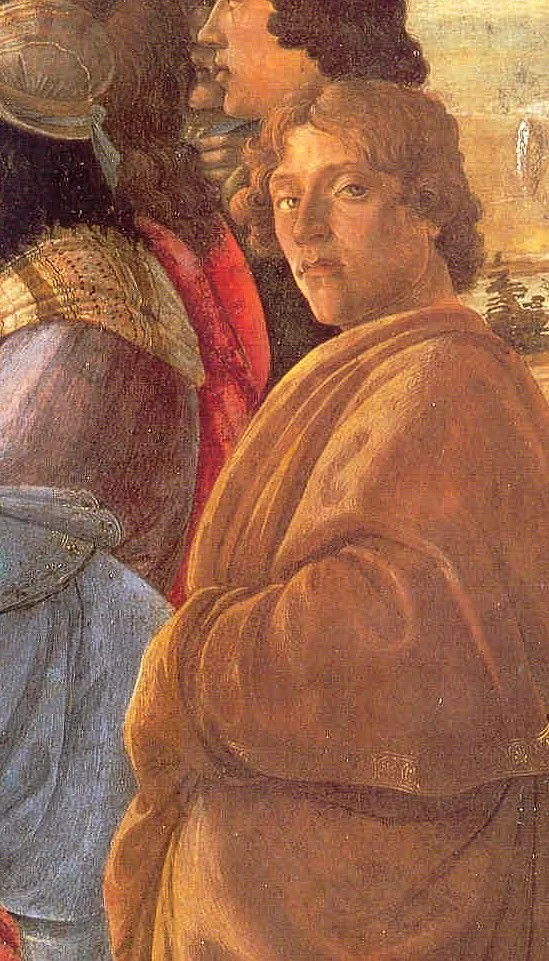
Fig. 1 Adorazione (S Botticelli autoritratto?)
Gewoonlijk plaatst de renaissance kunstenaar zich, indien hij er überhaupt zelf wil bij staan, op een eerder verborgen locatie in de achtergrond of aan de zijkant en kijkt hij steeds de toeschouwer aan.
Vasari, die niets zegt over een zelfportret, schrijft dat Botticelli (1444-1510) met dit werk nog maar pas naam verworven had als kunstenaar, waar men dan zou kunnen uit afleiden dat het erg ongewoon was om er zichzelf al op een dergelijke in het oog springende wijze bij te zetten (zie fig.1). Bovendien bekommerde Sandro zich, volgens dezelfde Vasari, helemaal niet om zijn uiterlijk. Indien hij de man in het okergeel zou geweest zijn, had Vasari dat ongetwijfeld vermeld. De man (eind in de 20, begin 30?) draagt ook geen hoofddeksel zoals de typische muts (de baret) waarmee een schilder gewoonlijk werd afgebeeld (zie fig. 2).
Ook op zijn andere versies van de Adorazione dei Magi die in dezelfde periode geschilderd zijn heeft Botticelli zichzelf (voor zover bekend) geen plaats gegeven en om er zich dan op de Adorazione-Medici uit de Uffizi op een dergelijke manier bij te zetten is toch vrij verrassend te noemen. Het zichzelf ten voeten uit afbeelden, met uitzondering van wat Luca Signorelli gedaan had in 1502 op het fresco met de Komst van de Antichrist in de dom van Orvieto, was zeker niet gebruikelijk (zie art. Luca Signorelli en de fresco’s in de dom van Orvieto).
Men zou eerder verwachten dat, gezien zijn uiterlijk en plaatsing, hier in het okergeel de opdrachtgever wordt afgebeeld. Bij nader toezien blijkt ook dat zijn kleed of mantel gedecoreerd is met figuurtjes in gouddraad, net zoals dat het geval is bij de kledij van de aanwezige leden van de Medici-familie. Ook Guasparre del Lama, die door sommigen nog steeds als de vermoedelijke opdrachtgever wordt beschouwd, kan moeilijk de man in het okergeel zijn want hij was in 1475 reeds een zestiger.
Volgens Maike Vogt-Lüerssen is de man in het okergeel inderdaad de opdrachtgever, met name Pierfrancesco de’ Medici il Giovane (1487-1525) uit de tak der Popolani, maar dan dateert het werk van veel later. Zij is van oordeel dat Botticelli (geboren in 1444) dan de oudere man met het lichtblauwe kleed moet zijn (zie fig.1), die er bij de herwerking (overschildering?) van het paneel achteraf in 1513 door zijn atelier is bijgeplaatst (zie art. Waarom er nog altijd geen eensgezindheid is over de datering van Botticelli’s Adorazione dei Magi). Sandro was in 1510 op 66-jarige leeftijd overleden.
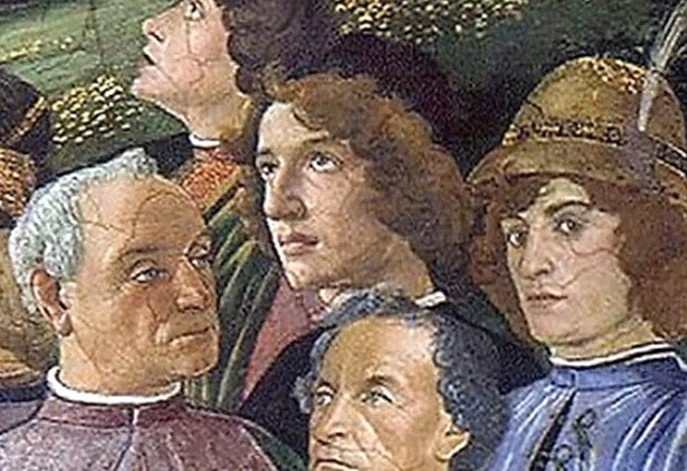
Fig.2 Tentazione di Cristo (Sistina Roma)
In 1481/82 heeft Botticelli op uitnodiging van paus Sixtus IV enkele fresco’s geschilderd in de Sixtijnse kapel (zie art. Botticelli’s al of niet verborgen boodschappen in de Sixtijnse kapel).
Op het fresco met de Verzoekingen van Christus verschijnt een personage met een gevederde hoed (rechts onderaan tussen de kunstenaars), die als enige in het ganse gebeuren naar de toeschouwer kijkt. Van hem wordt door Heinrich Pfeiffer en Sergio Rossi gezegd dat het een zelfportret van Botticelli zou kunnen zijn (zie fig.2).
Maar dat portret kan echter ook door zijn collega Luca Signorelli (1445-1523), die in 1482 naar Rome gekomen was, aan het fresco toegevoegd zijn. Die heeft dat in de Cappella della Madonna di San Brizio ook gedaan met zijn voorganger Fra Angelico (zie art. Luca Signorelli en de fresco’s in de dom van Orvieto).
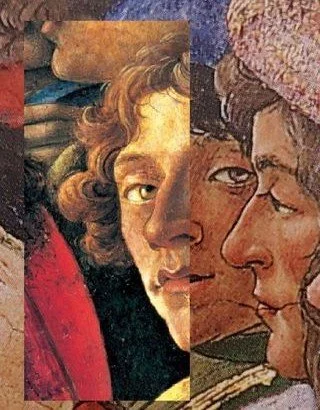
Fig. 3 Sovrapposizione (Renzi)
De grijsaard op het fresco in de Sixtijnse kapel kijkt naar de man met de hoed en wijst naar het gebeuren alsof hij wil zeggen hoe fraai hij het vindt of hoe trots hij is. Hij is het evenbeeld van zijn leeftijdsgenoot op de Adorazione (zie art. Wie is de man met het grijze haar op 2 werken van Botticelli) en zou volgens Bernard Gallagher Sandro’s leermeester Andrea del Verrocchio kunnen zijn.
De man met de gevederde hoed ziet er jonger uit dan de toen 38-jarige Botticelli en gelijkt niet op het portret dat Filippino Lippi enkele jaren later (in 1485) geschilderd heeft op het fresco in de Brancacci-kapel (zie art. Het ware gelaat van Sandro Botticelli).
Op het fresco met de Verzoekingen van Christus zou er ook nog een ander zelfportret van Botticelli te vinden zijn. Dat zou dan de half verborgen man zijn die zich bevindt in de groep van kunstenaars die achter kardinaal Riario (of Nardini?) heeft post gevat en die (mits uitvergroting) naar de toeschouwer blijkt te kijken. Van hem beweert Claudia Renzi dat het een zelfportret van Botticelli zou kunnen zijn dat gelijkt op de figuur in het okergeel van de Adorazione (waarvan zij dan aanneemt dat het Sandro is). Met een fotomontage heeft zij aangetoond dat er een opvallende faciale gelijkenis bestaat met de man in het okergeel, maar daarmee is nog niet bewezen dat het Sandro is (zie fig.3).
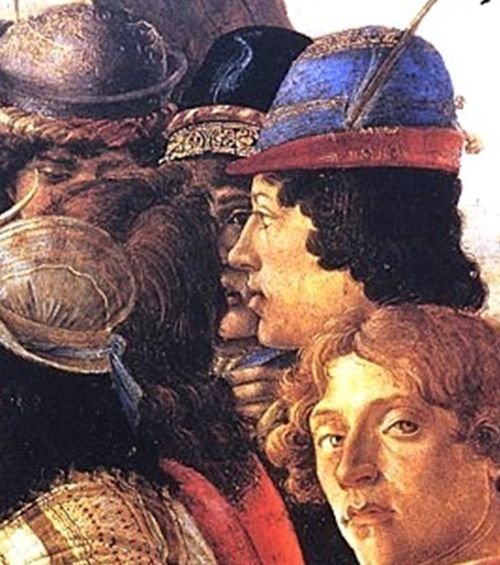
Fig. 4 L’ Adorazione dei Magi
Bij nader toezien valt er op de Adorazione ook zo’n half verborgen personage (met een fraaie blauwe muts) te bespeuren, naast de man het de blauwe hoed en boven de man in het okergeel (zie fig.4). In dat geval zou Sandro zich dus op de 2 werken op een gelijkaardige en uiterst bescheiden manier afgebeeld hebben, maar een verdere identificatie blijft toch zeer moeilijk, vooral ook wegens de jonge leeftijd van de figuren. Waarschijnlijk waren het leerlingen uit zijn atelier.
Besluit:
Dat Sandro Botticelli zichzelf als de man in het okergeel zou afgebeeld hebben op de Adorazione-Medici op een dergelijke pretentieuze manier is niet erg geloofwaardig.
Dat hij de man met de hoed op het fresco uit de Sixtijnse kapel zou kunnen zijn is verdedigbaar, vooral als het zijn opvolger geweest is die het portret gemaakt heeft.
Maar wellicht mag men er vanuit gaan dat Botticelli zichzelf nooit heeft afgebeeld en de theorie dat hij zich, half verdoken tussen de kunstenaars, zou gepenseeld hebben blijft dan ook zeer twijfelachtig.
Dat andere kunstenaars hem eer hebben willen bewijzen door hem een plaats te geven op een werk is zeker niet ongebruikelijk en vandaar dat zijn portret meer dan waarschijnlijk terug te vinden is op het fresco in de Brancacci-kapel (zie art. Het ware gelaat van Sandro Botticelli).
JVL
Did Botticelli paint a self-portrait on his Adorazione dei Magi?
The Uffizi altarpiece with the Adorazione dei Magi, which Sandro Botticelli probably painted ca. 1475, has been the subject of various interpretations and discussions for years. It is still generally assumed that the Adoration of the Magi or the Medici Adoration was commissioned by the banker Guasparre del Lama (the elderly man with the light blue robe) and that the man with the ochre yellow robe, who is on the right side of the scene, is Botticelli himself. However, there is no consensus at all about both identifications, except that they must have been existing characters.
Usually, the Renaissance artist, if he wants to be there at all, places himself in a rather hidden location in the background or on the side and always looks at the viewer.
Vasari, who says nothing about a self-portrait, writes that Botticelli (1444-1510) had gained fame as an artist with this work. One could deduce from this that such an eye-catching way of presenting himself was not to be expected (see fig.1). Moreover, according to the same Vasari, Sandro did not care about his appearance at all. If he had been the man in the splendid robe, Vasari would undoubtedly have mentioned it. The man (in his late 20s or early 30s?) also does not wear a headgear such as the typical cap (the beretto) with which a painter was usually represented (see fig.2).
As far as we know Botticelli did not give himself a place in his other versions of the Adorazione dei Magi and his presence in the Adorazione-Medici is therefore even more surprising. Portraying oneself full-length, with the exception of what Luca Signorelli had done in 1500 on the fresco with the Coming of the Antichrist in the cathedral of Orvieto, was certainly not common (see art. Luca Signorelli and the frescoes in the cathedral of Orvieto).
Given his appearance and placement one would rather expect the client to be depicted here in ochre yellow. On closer look, it also appears that his robe or cloak is decorated with figures in gold thread, just as is the case with the clothing of the members of the Medici family.
Even Guasparre del Lama, by many authors still considered to be the presumed commissioner, can hardly be the man in ochre yellow because he was already sixty in 1475.
According to Maike Vogt-Lüerssen, the man in the beautiful dress is indeed the commissioner, namely Pierfrancesco de' Medici il Giovane (1487-1525) from the Popolani branch, but then the work dates from much later. She claims that Botticelli (born in 1444) is the older man with the light blue robe (see fig.1), included in the scene by his pupils when the panel was modified (overpainted?) in 1513 (see art. Why there is still no agreement about the date of Botticelli’s Adorazione dei Magi). Sandro had died in 1510 at the age of 66.
In 1481/82, at the invitation of Pope Sixtus IV, Botticelli painted some frescoes in the Sistine Chapel (see art. Botticelli’s messages, hidden or not, in the Sistine Chapel). In the fresco with the Temptations of Christ, the figure with the feathered hat (bottom right among the artists), who is the only one looking at the viewer in the whole scene, is said by Heinrich Pfeiffer and Sergio Rossi to be a self-portrait (see fig.2). However, Sandro's portrait may also have been added here by his colleague Luca Signorelli (1445-1523). He did likewise in the Cappella della Madonna di San Brizio when he painted his predecessor Fra Angelico (see art. Luca Signorelli and the frescoes in the cathedral of Orvieto).
The grey-haired man in the fresco in the Sistine Chapel looks at the man in the hat and points to the scene as if to say how beautiful he thinks it is or how proud he is. He is the spitting image of the man in the Adorazione (see art. Who is the man with the grey hair in 2 works of Botticelli) and, according to Bernard Gallagher, could be Sandro's teacher Andrea del Verrocchio.
The man with the feathered hat looks younger than the then 38-year-old Botticelli and does not resemble the portrait that Filippino Lippi painted a few years later in 1485 on the fresco in the Brancacci Chapel (see art. The true face of Sandro Botticelli).
The fresco with the Temptations of Christ is also said to include another self-portrait by Botticelli. That would then be a half-hidden man looking at the viewer and standing behind Cardinal Riario (or Nardini?). Claudia Renzi claims that it could be a self-portrait of Botticelli because he resembles the man in ochre yellow from the Adorazione (whom she then identifies as Sandro). With a photomontage she has shown that there is indeed a remarkable facial resemblance to the man in ochre yellow, but this does not prove that he is Sandro (see fig.3).
On closer look, one can also find an identical half-hidden figure (with a fine blue cap) on the Adorazione, next to the man in the blue hat and above the man in ochre yellow (see fig.4). In that case Sandro would have portrayed himself in a similar and extremely modest way on both works, but further identification remains difficult, especially because of the young age of the figures. They were probably students from his studio.
Conclusion:
It is practically unimaginable that Sandro Botticelli would have depicted himself in the Adorazione as the man with the ochre yellow robe in such a pretentious way.
That he might be the man in the hat in the fresco from the Sistine Chapel is defendeble, especially if it was his successor who made the portrait.
The theory that he would have painted himself, half-hidden among the other artists remains very doubtful and perhaps one can assume that Botticelli never depicted himself at all. That other artists have wanted to pay tribute to him by giving him a place on a work is certainly not unusual and therefore his portrait can more than likely be found in the fresco of the Brancacci chapel (see art. The true face of Sandro Botticelli).
Literatuur:
Deimling, B Sandro Botticelli (Taschen). Keulen, 1996.
Gallagher, B. Botticelli’s Uffizi Adoration of the Magi
Lightbown, R. Filipepi, Alessandro in: Dizionario biografico vol. 47 (1997).
Parenti, D. Adoration of the Magi by Sandro Botticelli
Renzi, C. Chi non punisce il male comanda che si faccia: la Sistina di Botticelli
e la congiura dei Pazzi (About Artonline, 2018).
Van Laerhoven J. Florentijnse wandelingen, dl. III (Botticelli). Kermt, 2021².
zie art. Botticelli’s al of niet verborgen boodschappen in de Sixtijnse kapel.
zie art. Het ware gelaat van Sandro Botticelli.
zie art. Luca Signorelli en de fresco’s in de dom van Orvieto.
zie art. Staan de moordenaars van Giuliano de’ Medici op Botticelli’s
Aanbidding van de Wijzen?
zie art. Waarom er nog altijd geen eensgezindheid is over de datering van
Botticelli’s Adorazione dei Magi.
zie art. Wie is de man met het grijze haar die Botticelli op 2 van zijn
werken heeft afgebeeld?
zie art. Wie zijn de Medici op de Adorazione van Botticelli?
Vasari, G. Le Vite de' Più Eccellenti Pittori, Scultori,
e Architettori da Cimabue insino a' Tempi Nostri. Firenze, 1550.
Vogt-Lüerssen, M. The Medici – kleio.org