Guccio di Bonagiunta de’ Medici, de man en zijn sarcofaag
Guccio di Bonagiunta de’ Medici, de man en zijn sarcofaag
In de late 13e eeuw was Guccio de' Medici, uit de tak van Bonagiunta I de' Medici (1), één van de belangrijke sleutelfiguren die de basis legden voor de politieke opkomst van zijn familie in de Florentijnse republiek. In die tijd behoorden de Medici nog reeds tot de opkomende klasse van rijke kooplieden en gildeleden. In de Florentijnse geschiedenis is hij bekend gebleven als de man die in de sarcofaag van het Battistero (de doopkapel) begraven werd. Hij was één van de zonen van Bonagiunta II, die in het stadsbestuur (de Signoria) van Firenze gezeteld hebben als priore of gonfaloniere di giustizia (zie stamboom). Reeds in 1291 was zijn broer Ardingo als eerste lid van de familie verkozen als prior. Guccio zelf heeft 4 keer deel uitgemaakt van het bestuur, 1 keer als gonfaloniere (in 1299) en 3 keer als prior (in 1304, 1308 en 1315).
Zijn laatste verschijning als prior in 1315 en het aantreden van zijn zoon Grifo als prior in 1321 kan er op wijzen dat hij tussen 1315 en 1320 moet overleden zijn. Aangezien hij ongeveer 40 jaar zal geweest zijn toen Guccio voor het eerst verkozen werd in 1299, zal hij ca.1260 geboren zijn. Hij was gehuwd met Margherita degli Agli (of Alli), waarschijnlijk de dochter van Lotto degli Agli die hem in 1285 als prior in het stadsbestuur vooraf gegaan was.
Guccio (of Uguccio, waarschijnlijk genoemd naar Ugo di Bonagiunta I, zijn overgrootvader) leefde in een woelige periode. Giano della Bella had met zijn Ordinamenti di Giustizia in 1293 voor heel wat beroering gezorgd door de magnaten (meestal van adel) uit te sluiten van het politieke leven, het lidmaatschap van een gilde als eis te stellen bij het zich kandidaat stellen voor een politieke functie en het ambt van gonfaloniere di giustizia (de “standaardhouder van het recht”) in te voeren. De Medici stonden toen bekend als popolani (volksgezinden) die mee de strijd tegen de magnati voerden (zie art. over Giano della Bella). Guccio werd als lid van het Arte della Lana (het wolgilde) voor het eerst gonfaloniere in 1299, 6 jaar nadat het prestigieuze ambt was ingesteld.
Hij was ook deelachtig aan de strijd tussen de Witte en de Zwarte Welfen in Firenze die escaleerde in 1301 tot een soort van burgeroorlog en met de verbanning van de Witte Welfen in 1302 een hoogtepunt had gekregen. De laatste “witte” signoria was verkozen op 15 oktober 1301 en werd voorgezeten door Piero Brandani. De eerste “zwarte” signoria nam op 7 november 1301 onder leiding van Tedice Manovelli de macht over.
Op het moment dat Guccio gonfaloniere werd in 1299 was er nog geen sprake van een duidelijke witte of zwarte partij en kan de samenstelling van zijn ploeg “gemixt” genoemd worden. Zelf behoorde hij zeer waarschijnlijk (zoals de meeste leden van de Medici) tot de zwarte factie aangezien hij in de volgende jaren bleef zetelen in een aantal signorie.
In 1308, 1311 en 1315 kregen de Witte Welfen amnestie aangeboden en keerden de meesten (behalve Dante Alighieri) terug naar Firenze, maar dat betekende niet dat zij opnieuw politieke rechten kregen; zij waren de zogenaamde malveduti. De Zwarte Welfen bleven het bestuur tot in de jaren 20 domineren.
In de maanden dat Guccio prior geweest is, was de stad ook verwikkeld geraakt in een aantal militaire conflicten. In oktober 1308 was Uguccione della Faggiuola, de gevreesde Ghibellijnse condottiere en heer van Pisa en Lucca op weg om Firenze te komen belegeren, maar na de arrestatie van zijn schoonzoon Corso Donati (die hem om hulp gevraagd had) had hij daarvan afgezien (zie art. Zwarte en Witte Welfen in Firenze). In augustus 1315 werd bij Montecatini een gewapende coalitie van Welfische steden (met troepen uit Firenze) verslagen door de Ghibellijnse strijdmacht van dezelfde Uguccione della Faggiuola en ook dit keer waren de Florentijnen zeer beducht geweest voor een aanval.
Welke rol Guccio tijdens al deze gebeurtenissen precies gespeeld heeft is niet erg duidelijk, maar dat hij als onderhandelaar, verzoener of wegens zijn krachtdadig optreden als politicus grote bewondering genoot in zijn geboortestad blijkt uit het feit dat hij na zijn dood bijgezet werd in een sarcofaag in het Battistero van de Dom. Die eer was niet voor iedereen weggelegd.
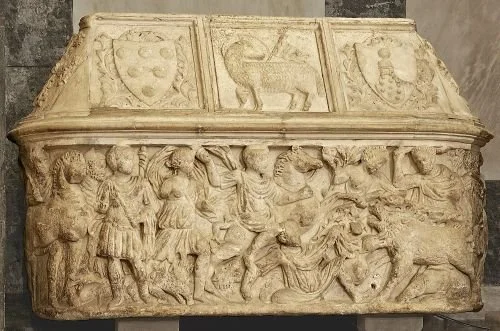
Fig. 1 Sarcofago Guccio de’ Medici (Battistero, Firezne)
Op een authentieke Romeinse sarcofaag uit de 4de eeuw met een reliëf dat de Calydonische Jacht (op een everzwijn) voorstelt, is een middeleeuws marmeren deksel geplaatst. Het deksel is gedecoreerd met het Lam Gods, het symbool van het machtige wolgilde (Arte della Lana), waarvan hij lid en consul was. Daarnaast bevat het deksel twee varianten van het wapenschild van de familie de' Medici. Links verschijnt een schild met 6 en rechts een schild met 9 bezanten (of palle) onder een helm, die misschien verwijst naar een eventuele ridderschap (zie fig.1).
Aangezien experts bevestigd hebben dat het deksel met de 3 afbeeldingen authentiek begin 14de eeuw is, mag men daaruit besluiten dat toen reeds het Medici-blazoen met de 6 palle werd gebruikt (zie art. Bezanten op het wapenschild van de Medici). Als de schilden later waren toegevoegd, had men marmer rondom de schilden moeten weghakken (wat diepe inkepingen in het deksel had achtergelaten), maar het reliëf loopt vloeiend door.
Ook nog vele andere leden van de Medici-familie hebben hun laatste rustplaats in een sarcofaag gekregen, maar alleen Guccio di Bonagiunta was bijgezet in een origineel (weliswaar hergebruikt) Romeins exemplaar. Hoewel Guccio hier al in 1315/20 werd in begraven, heeft de sarcofaag tussentijds een zwerftocht gemaakt. Het monument stond oorspronkelijk buiten tegen de gevel van het Battistero. Later werd het verplaatst naar de binnentuin van het nabijgelegen Palazzo Medici-Riccardi om uiteindelijk in 1928 definitief een ceremoniële plek in de doopkapel te krijgen.
De sarcofaag staat er nog steeds, maar of Guccio er nog in ligt is een andere kwestie. In 1824 werden er bij opgravingen in de dom en de doopkapel verschillende sarcofagen ontdekt met menselijke resten die herbegraven werden. Of de juiste resten in de juiste sarcofaag gelegd werden is nog maar de vraag…
(1) Volgens Grasselini en Fracassini is de tak van Bonagiunta uitgestorven in 1363 met Bonagiunta di Francesco di Ardingo, maar in de Tratte van de 3 Maggiori worden Manetto di Neri (in 1381 en 1390), Fantino di Giovanni (in 1382 en 1384) en Neri di Matteo (1399 en 1400) nog vermeld als leden van de Signoria.
Zanobi di Grifo (de kleinzoon van Guccio) was in 1384 Castellano van Arezzo en Fantino di Fantino was van 1423 tot 1425 agent van de Medici-bank in Napels. Met zijn overlijden zou de tak dan pas in 1429 uitgestorven zijn.
Stamboom: (* vermeld in het stadsbestuur)
Bonagiunta II di Galgano di Ugo di Bonagiunta I de’ Medici (*1280)
_________|____________________________________________________________
| | | | | |
Albizzo Ardingo Guccio Lapo Lippo Mann(ett)o
(*1303) (*1291) (*1299/*1315) (*1317) |
| | x Margherita degliAgli | Neri (Nanni?) (*1349)
Giovanni Francesco ____|_________ Coppo ________|________
| (*1351) | | (*1340) | |
Fantino (*1382) | Grifo (*1321) Albizzo Matteo Mannetto
| Bonagiunta | | (*1390)
Fantino (+1429) (+1363) Zanobi (*1384) Neri (*1400)
Samenstelling van de signorie van
Januari/februari 1299
Gonfaloniere Guccio de’ Medici was voorzitter van een “gemixte” signoria, met als priori
Boninsegna Machiavelli, Lando Albizzi, Gentile Altoviti, Cione Magalotti, Piero Buonavolti en Matteo Delcanto
Van 15 oktober tot 6 november 1301:
Gonfaloniere Piero Brandani was voorzitter van de laatste “witte” signoria met als priori
Dino Compagni, Lippo Cambi, Girolamo Girolami, Guccio Marignolli, Vermiglio Alfani en Lapo Angiolieri.
November/december 1301
Gonfaloniere Tedice Manovelli was voorzitter van de 1ste volledig “zwarte” signoria met als priori
Duccio Magalotti, Neri Ardinghelli, Ammanato Beccanugi, Andrea?, Ricco Albizzi en Baldo Ridolfi.
JVL
Guccio di Bonagiunta de' Medici, the man and his sarcophagus
In late 13th century, Guccio de' Medici (from the branch of Bonagiunta I de' Medici) was one of the important key figures who laid the foundation for his family's political rise in the Republic of Florence. At that time, the Medici were already part of the emerging class of wealthy merchants and guild members. He is known in Florentine history as the man who was buried in the sarcophagus of the Battistero (the baptistery). He was one of the sons of Bonagiunta II, who were present in the city council (the signoria) as priore or gonfaloniere di giustizia. In 1291 his brother Ardingo was the first member of the family to be elected as prior. Guccio himself was a member of the city government 4 times, once as gonfaloniere (in 1299) and 3 times as priore (in 1304, 1308 and 1315).
His last appearance in 1315 as prior and the election of his son Grifo as prior in 1321 may indicate that he must have died between 1315 and 1320. Being about 40 years old when he was first elected in 1299, Guccio was probably born around 1260.
He was married to Margherita degli Agli (or Alli), possibly the daughter of Lotto degli Agli who had preceded him in 1285 as prior in the city council.
Guccio (or Uguccio, probably named after Ugo di Bonagiunta I, his great-grandfather) lived in a turbulent period. Giano della Bella had caused quite a stir with his Ordinamenti di Giustizia in 1293 by excluding the magnates (mostly of nobility) from political life, making membership of a guild a requirement when running for political office and introducing the gonfaloniere di giustizia (the "standard-bearer of justice") as the leader of the signoria. The Medici were then known as popolani (the popular party) in their struggle against the magnati (see article on Giano della Bella). As a respected member of the Arte della Lana (the wool guild) Guccio became gonfaloniere in 1299, 6 years after the prestigious office was introduced.
He was also a witness of the conflict between the White and the Black Guelphs in Florence, which escalated in 1301 to a kind of civil war and reached a climax with the banishment of the White Guelphs in 1302. The last "white" signoria was elected on October 15, 1301 and was presided by Piero Brandani. The first "black" signoria came in power on November 7, 1301 under the leadership of Tedice Manovelli.
When Guccio became gonfaloniere in 1299, there was no clear white or black party yet and the composition of his signoria can be called a mix. He himself most likely belonged (as many members of the Medici) to the black faction, since he continued to sit in a number of signorie in the following years.
In 1308, 1311 and 1315 the White Guelphs were granted amnesty and most of them (except Dante Alighieri) returned to Florence, but that did not mean that they had regained their political rights. They were still the malveduti (“the bad guys”) while the Black Guelphs continued to dominate the government in the 1320s.
In the periods that Guccio was active as a prior, the city was also involved in a number of military conflicts. In October 1308, Uguccione della Faggiuola, the feared Ghibelline condottiere and lord of Pisa and Lucca, was on his way to besiege Florence, but after the arrest of his son-in-law Corso Donati (who had asked for his help) he had refrained from doing so (see art. Black and White Guelphs in Florence).In August 1315, an armed coalition of Guelph cities (including troops from Florence) was defeated at Montecatini by the Ghibelline force of that same Uguccione della Faggiuola and once again the Florentines were fearing a siege.
The exact role that Guccio played during all these events is not very clear, but that he enjoyed great admiration in his native city as a negotiator, conciliator or because of his vigorous action as a politician is shown by the fact that after his death he was buried in a sarcophagus in the Battistero of the Cathedral. Such an honour was not reserved for everyone.
He was laid down in an authentic Roman sarcophagus from the 4th century with a relief depicting the Calydonian Hunt (a wild boar), and covered with a medieval marble lid. The lid is decorated with a Holy Lamb, the symbol of the powerful wool guild (Arte della Lana) of which he was a member and consul and with two variants of the coat of arms of the Medici family. On the left appears a shield with 6 bezants and on the right a shield with 9 bezants (or palle) under a helmet, which may refer to a possible knighthood (see fig.1).
Since experts have confirmed that the lid with the 3 images is authentic from the beginning of the 14th century, it may be concluded that the Medici blazon with the 6 palle was already used at that time (see art. Bezants on the Medici coat of arms). If the shields had been added later, marble would have had to be cut away around the shields (which would have left deep notches in the lid) but the relief continues smoothly.
Many other members of the Medici family found their final resting place in a sarcophagus, but only in Guccio’s case was used an original (albeit reused) Roman example. Although Guccio was buried here between 1315 and 1320, the sarcophagus has changed places in the course of time. The monument originally stood outside against the façade of the baptistery. Later it was moved to the courtyard of the nearby Palazzo Medici-Riccardi to finally get a ceremonial place in the Battistero in 1928.
The sarcophagus is still there, but whether Guccio is still in it is another matter. During excavations in the cathedral and the baptistery in 1824 were discovered several sarcophagi with human remains that were reburied. Whether the right human fragments were placed in the right sarcophagus remains the question….
(1) According to Grassellini and Fracassini the branch of Bonagiunta became extinct in 1363 with Bonagiunta di Francesco di Ardingo, but in the Tratte of the 3 Maggiori, Manetto di Neri (in 1381 and 1390), Fantino di Giovanni (in 1382 and 1384) and Neri di Matteo (1399 and 1400) are still mentioned as members of the Signoria.
Zanobi di Grifo (Guccio’s grandson) was Castellano of Arezzo in 1384 and Fantino was agent of the Medici bank in Naples from 1423 to 1425. With his death, the branch would not have become extinct until 1429.
Literatuur:
Burr Litchfield, R. Lijsten van de Tre Maggiori (1282-1532)
Tratte Search Interface (brown.edu)
Di Cagno, G. La Cathédrale, le Baptistère et le Campanile. Firenze, 1974.
Sepolcro di Guccio de' Medici
Giusti, A. Il Battistero di San Giovanni a Firenze. Firenze, 2000.
Grassellini, E e.a. Profili Medicei. Firenze, 1982.
Hibbert, C. The Rise and Fall of the House of Medici. Londen, 1987.
Smith, G . Gaetano Baccani's "Systematization" of the Piazza del Duomo in
Florence. In: Journal of the Society of Architectural Historians
vol. 59, nr. 4 (2000).
Strathern, P. The Medici. Godfathers of the Renaissance. Londen, 2003.
Van Laerhoven, J. De opkomst van de familie de’ Medici in de Florentijnse republiek.
Herk-de-Stad, 2012.
zie art. Bezanten op het wapenschild van de Medici.
zie art. De gonfalonieri van Firenze.
zie art. Giano della Bella en de strijd tussen Magnati en Popolani.
zie art. Zwarte en Witte Welfen in Firenze.