Was Leonardo da Vinci getrouwd met Isabella van Aragon?
Was Leonardo da Vinci getrouwd met Isabella van Aragon?
Van de Mona Lisa, de mysterieuze dame uit het Louvre, wordt gezegd (o.a. door Robert Payne en Jerzy Kulski) dat het Isabella van Aragon zou zijn, de echtgenote van Gian Galeazzo Sforza, de hertog van Milaan. De Duits-Australische historica Maike Vogt-Lüerssen voegt daar aan toe dat Leonardo haar geportretteerd zou hebben in 1489 toen hij in Milaan vertoefde aan het hertogelijk hof. De hertogin zou verscheidene keren model gestaan hebben voor haar favoriete hofschilder en in 1497 met hem in het geheim getrouwd zijn. Maike Vogt heeft al vele verrassende uitspraken en spectaculaire onthullingen gedaan in verband met renaissance figuren, maar dit verhaal is bijzonder merkwaardig.
Isabella van Aragon (of van Napels) was de in 1470 geboren dochter van koning Alfons II van Napels en Ippolita Sforza van Milaan. In 1489 was zij getrouwd met haar één jaar oudere volle neef Gian Galeazzo Sforza die in 1476 na de moord op zijn vader Galeazzo Maria hertog van Milaan geworden was onder het regentschap van zijn oom Lodovico Sforza il Moro. Het koppel had 3 kinderen, Francesco il duchetto (1491-1512) (1), Ippolita (1493-1501) en Bona Maria (1495-1557).
Wegens zijn jonge leeftijd werd Gian Galeazzo volledig door zijn oom opzij geschoven en toen hij reeds in 1494 kwam te overlijden, werden Isabella en haar kinderen naar het Castello Sforzesco van Milaan verbannen. Dat was voor haar vader Alfonso van Napels aanleiding geweest om troepen te sturen richting Milaan wat dan de aanzet is geworden voor de Italiaanse Oorlogen. In 1495 kwamen Franse troepen Napels bezetten en na de dood van haar vader Alfonso en haar broer Ferdinandino in 1495 en 1496 stond Isabella er alleen voor. Blijkbaar vond ze troost bij haar favoriete hofkunstenaar Leonardo uit Firenze.
Da Vinci, die dacht dat hij zijn capaciteiten als uomo universale beter in Milaan kon ten toon spreiden dan in Firenze, had reeds in 1482 zijn diensten aangeboden aan hertog Lodovico Sforza. Die had hem niet enkel als kunstenaar, maar vooral als ingenieur en wapenkundige verwelkomd.
Tijdens zijn eerste Milanese periode kreeg hij van il Moro ook de opdracht om een gigantisch bronzen ruiterstandbeeld te maken, maar dat is er nooit gekomen want toen er oorlog dreigde werd het brons gebruikt om kanonnen te gieten.
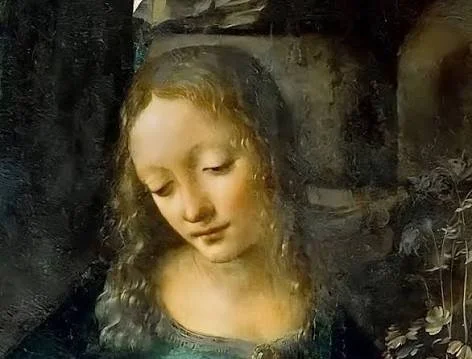
Fig.1 De Madonna met de Rotsen (Leonardo,Louvre)
Ondertussen had hij (tussen 1483 en 1486) voor de kerk van San Francesco il Grande een Madonna van de Rotsen geschilderd (zie fig.1), waar Isabella volgens Vogt zou op afgebeeld zijn (2).
Maar als Isabella pas op 1 februari 1489 in Milaan aangekomen is kan zij moeilijk model gestaan hebben voor de Madonna tenzij het schilderij van een latere datum is.
Leonardo had zich ook een bekwaam ceremoniemeester getoond wanneer hij spektakels zoals het trouwfeest van Isabella en Gian Galeazzo in 1489 en dat van il Moro met Beatrice d’Este in 1491 had mogen organiseren.
Aan zijn fresco met het Laatste Avondmaal in de Santa Maria delle Grazie werkte hij van 1495 tot 1498. De figuur van de apostel Johannes, met het lichtjes gebogen hoofd en het vrouwelijk uiterlijk, vertoont veel gelijkenis met de Madonna van de Rotsen en kan volgens Vogt bijgevolg ook met Isabella vereenzelvigd worden (3) (zie art. Wie is wie op het Laatste Avondmaal van Leonardo?).
Maike Vogt is er van overtuigd dat toen Isabella in 1494 weduwe werd van Gian Galeazzo zij een relatie met de toen 42-jarige Leonardo zou begonnen zijn en met hem (voor de kerk) getrouwd zijn in 1497. Aangezien dat huwelijk geheim moest blijven zijn er uiteraard geen documenten of andere geschreven bewijzen voor te vinden.
Maar het verhaal gaat verder. Leonardo en Isabella hadden ook nog 5 kinderen; Francesco (1498-1570) de graaf van Melzo, Giovanna (1502-75) de hertogin van Paliano, Maria (1503-68) de markgravin van Vasto en Pescara, Antonio (1506-43) de hertog van Montalto en Isabella (ca.1510-63) prinses van Squillace (4). Daar is echter nergens een bewijs van te vinden en officieel heeft Isabella enkel maar haar 3 kinderen gehad met Gian Galeazzo Sforza.
Dat Leonardo al die kinderen dan heeft kunnen verwekken doet wenkbrauwen fronsen, niet zozeer omdat hij bekend stond als homo-of biseksueel, maar vooral wegens tijdsgebrek.
In 1499 was hij na de intocht van Lodewijk XII in Milaan, naar Mantua gevlucht (5). In april 1500 was hij terug in Firenze, in 1502 stelde hij zich in dienst van Cesare Borgia in Imola, in 1503 kreeg hij van het Florentijns stadsbestuur de opdracht om de Grote Zaal van het Palazzo Vecchio te decoreren (samen met Michelangelo), in 1504 was hij in Piombino om de fortificaties te versterken, in 1505 was hij weer in Firenze en in 1506 keerde hij terug naar Milaan. Van 1507 tot 1508 pendelde hij tussen Milaan, Parma en Firenze en in 1509 vertoefde hij in Pavia waar hij aan de universiteit samenwerkte met de anatomicus Marcantonio della Torre. In 1513 bezocht hij paus Leo X in Rome en in 1515 was hij samen met de kerkvorst in Bologna waar hij de Franse koning Frans I ontmoette, die hem achteraf heeft uitgenodigd in Amboise.
Inmiddels was Isabella in 1500 naar Napels vertrokken en in 1502 had zij zich in Bari gevestigd, waar zij zich bezig hield met het bestuur van het hertogdom dat haar neef Ferdinand II van Aragon (de “katholieke”), die de kroon van Napels in handen gekregen had, haar cadeau gedaan had.
Nadat hij een aantal projecten had afgewerkt in Noord-Italië vermoedt Vogt dat Leonardo pas eind 1504 Isabella vervoegd heeft in Bari. Maar ondertussen zou de hertogin de immer afwezige Leonardo toch al 2 kinderen (in 1502 en 1503) geschonken hebben ?
De meeste biografen zijn er van overtuigd dat da Vinci in de herfst van 1516 samen met zijn leerlingen Gian Giacomo Caprotti detto Salai en Francesco Melzi naar Frankrijk gereisd is op uitnodiging van Frans I, maar Maike Vogt beweert (in een best origineel maar uiteraard fictief interview met de hertogin) dat Isabella Leonardo ook als “geheim agent” in 1517 vanuit Bari naar het Franse hof gestuurd had.
Hij is er op 2 mei 1519 overleden in het slot van Clos-Lucé en begraven in de kapel van Saint-Hubert in het kasteel van Amboise. Maar elke toerist die denkt dat hij daar bij het stoffelijk overschot van Leonardo staat, wordt bij de neus genomen want volgens het alternatieve verhaal had Isabella zijn lichaam laten overbrengen naar de kerk van San Domenico Maggiore in Napels (in sarcofaag 27) waar zijzelf ook in 1524 is bijgezet in een familie-sarcofaag.
Dat het schilderij van Mona Lisa uit het Louvre volgens een aantal auteurs een portret van Isabella van Aragon kan zijn is verdedigbaar want er is nooit bewezen dat deze dame (ondanks de naam van het portret) met zekerheid Lisa dei Gherardini of Lisa del Giocondo (haar schoonzus) kan zijn (zie art. Bronnen die “bewijzen”dat Lisa del Giocondo de Mona Lisa van Leonardo is).
In dit verband kan er ook verwezen worden naar het portret van Isabella van Napels, dat geschilderd is door Bernardino de Conti ca. 1495 en weinig gelijkenis vertoont met Mona Lisa. Het wordt nochtans beschouwd als haar meest betrouwbare afbeelding omdat onderaan op het paneel haar naam en titel aangebracht zijn (zie art. Wie is de Mona Lisa van Leonardo?).
De Mona Lisa werd volgens Vogt geschilderd in 1489. Isabella was toen nog maar 18 of 19 jaar oud en haar rouwkleed is dan het dateringsbewijs. Maar de geportretteerde uit het Louvre is echter een vrouw van in de 30. Leonardo zou dan het portret aangepast hebben (gezicht en handen) maar wanneer en hoe dat gebeurd is wordt in het ongewisse gelaten.
Voor de Leonardo-kenners M.Kemp en F.Zöllner draagt de geportretteerde geen Sforza-rouwkleed en is zij niet te vereenzelvigen met Isabella van Aragon. Het portret is volgens hen dan ook niet geschilderd in 1489. Zij gaan er vanuit dat het is opgestart rond 1503 en aangepast werd tussen 1513 en 1517.
Dat Isabella na de dood van Gian Galeazzo troost gezocht en gevonden heeft bij haar favoriete kunstenaar is begrijpelijk. Een geheime relatie behoort dus zeker tot de mogelijkheden, maar dat zij als adellijke dame in het huwelijk zou getreden zijn met een man van lage komaf (een bastaard nota bene) is praktisch uitgesloten. Waarom Leonardo een rusteloos bestaan zou verkozen hebben boven een comfortabel leventje aan het hof van Bari “omringd door vrouw en kinderen” is moeilijk te begrijpen en waarom Isabella hem dan in 1517 naar Frankrijk zou gestuurd hebben (met haar portret) is al evenmin te vatten.
In zijn testament (waarin Isabella en haar kinderen niet vermeld worden) had Leonardo laten stipuleren dat hij wilde begraven worden in de kerk van Saint-Florentin in Amboise, maar aangezien de kerk later verwoest is kan men niet zeker zijn van de aanwezigheid van zijn stoffelijke resten. Dat Isabella (niet noodzakelijk als echtgenote maar eventueel ook als bewonderaarster) zijn lichaam zou hebben laten overbrengen is niet onmogelijk, maar toch weinig waarschijnlijk bij gebrek aan bewijzen.
Ook in het testament van Isabella (begin 1524) is er geen enkel spoor van Leonardo te vinden.
Toen Leonardo op het einde van zijn leven (1515?) een verlamming kreeg aan zijn rechterhand is er geen sprake van een bericht van of naar Isabella en ook bij zijn overlijden was zij nergens te bespeuren (zie art. In welke mate heeft de verlamming van zijn rechterhand Leonardo’s artistiek oeuvre beïnvloed?). Maar Bari en Amboise liggen ver uit elkaar en misschien was zij niet in staat geweest om de reis te maken (wegens ziekte?).
Logischer zou echter zijn dat, als er überhaupt een affaire of een huwelijk zou geweest zijn, Isabella en Leonardo daarna ieder hun eigen weg gegaan zijn en elkaar uit het oog verloren hebben. Haar portret zou hij dan altijd bij zich gehouden hebben als een souvenir, maar hoe hij het dan in al die jaren zou aangepast hebben, zonder haar lijflijke aanwezigheid, blijft een raadsel.
De veronderstellingen van Maike Vogt-Lüerssen roepen meer vragen op dan dat er antwoorden gegeven worden. Zij heeft de Leonardo-fans wel een fascinerend hypothetisch verhaal gepresenteerd, dat echter zonder echte bewijsvoering (behoudens nieuwe ontwikkelingen) enkel maar kan leiden tot volgend
Besluit:
1.Heeft Isabella model gestaan voor Leonardo? zeer waarschijnlijk.
2.Was er wederzijds respect? zeer zeker
3.Is zij de Mona Lisa? zeer onwaarschijnlijk
4.Hebben zij een verhouding gehad? mogelijks
5.Zijn zij ooit getrouwd geweest? neen
6.Hebben zij 5 “verborgen kinderen” gehad? zeker niet
JVL
(1) De “kleine hertog” heeft zijn vader echter niet opgevolgd want het was de zoon van il Moro, Massimiliaan die het bestuur in Milaan in 1512 in handen kreeg, na de verdrijving van de Fransen.
(2) Ook in de National Gallery van Londen wordt er een Madonna van de Rotsen van Leonardo bewaard die dateert uit 1494. De lijst van portretten waarop Isabella volgens Vogt zou afgebeeld zijn is bijzonder lang. Zie The Eight Children of Isabella of Aragon, Duchess of Milan and Bari, 1470-1524
(3) Van de apostel Johannes wordt ook beweerd dat het Maria Magdalena zou zijn (in de gedaante dan van Isabella).
(4) Andere auteurs noemen (verkeerdelijk volgens Maike Vogt) Giovanna, Maria en Antonio de kinderen van Ferdinando de hertog van Montalto en Castellana di Cardona.
Isabella, de prinses van Squillace wordt niet als een bestaande historische persoon aanvaard.
Francesco de graaf van Melzo, kan verward worden met Isabella en Galeazzo’s oudste zoon
Francesco il duchetto of met Francesco Melzi de leerling van Leonardo.
(5) In Mantua verbleef Leonardo aan het hof van Isabella d’Este, met wie hij een uitgebreide correspondentie heeft gevoerd. Hij heeft deze “andere Isabella” ook geportretteerd en zij wordt door sommige auteurs ook geïdentificeerd als Mona Lisa.
JVL
Was Leonardo da Vinci married to Isabella of Aragon?
Some authors, such as Robert Payne and Jerzy Kulski, are convinced that Mona Lisa, the mysterious lady from the Louvre, is none other than Isabella of Aragon, the wife of Gian Galeazzo Sforza, the Duke of Milan. The German-Australian historian Maike Vogt-Lüerssen confirms this and adds that Leonardo portrayed her in 1489 when he was in Milan at the ducal court. The Duchess would have posed for her favourite court painter several times and in 1497 she would have secretly married him. Maike Vogt has already made many surprising statements and spectacular revelations in connection with Renaissance figures, but this story is particularly remarkable.
Isabella of Aragon (or Naples) was the daughter of King Alfonso II of Naples and Ippolita Sforza of Milan, and born in 1470. In 1489 she was married to her first cousin Gian Galeazzo Sforza, who had become Duke of Milan in 1476 (when he was 7) under the regency of his uncle Lodovico Sforza il Moro after the murder of his father Galeazzo Maria. The couple had 3 children, Francesco il duchetto (1491-1512) (1), Ippolita (1493-1501) and Bona Maria (1495-1557).
Young Gian Galeazzo was completely pushed aside by his uncle and when he died in 1494 (when he was 25) Isabella and her children were exiled to the Castello Sforzesco in Milan. This had prompted her father Alfonso of Naples to send troops to Milan, which then became the impetus for the Italian Wars. In 1495, French troops came to occupy Naples and after the death of her father Alfonso and her brother Ferdinandino in 1495 and 1496, Isabella was on her own. Apparently she found solace in her favourite court artist Leonardo from Florence.
Convinced that he could display his abilities as uomo universale better in Milan than in Florence, da Vinci had offered his services to Lodovico Sforza in 1482. The Duke had welcomed him not only as an artist, but especially as an engineer and an expert on weapons.
During his first Milanese period, il Moro had asked him to make a gigantic bronze equestrian statue, but that was never was completed because when war threatened, the bronze was used to cast cannons.
In the meantime (between 1483 and 1486) he had painted a Madonna of the Rocks for the church of San Francesco il Grande (see fig.1), in which (according to Vogt) Isabella is depicted as the Madonna (2).
But if Isabella did not arrive in Milan until 1 February 1489, she could hardly have been modelling for Leonardo, unless the painting is of a later date.
Leonardo had also proved himself to be a skilled master of ceremonies when he organized the wedding of Isabella and Gian Galeazzo in 1489 and the wedding of il Moro with Beatrice d'Este in 1491.
He worked on his fresco of the Last Supper in the Santa Maria delle Grazie from 1495 to 1498. The figure of the apostle John, with the slightly bowed head and the feminine appearance, bears a great resemblance to the Madonna of the Rocks and, according to Vogt, can therefore also be identified with Isabella (3) (see art. Who's who at Leonardo's Last Supper?).
It is Maike Vogt’s belief that when Isabella became Gian Galeazzo’s widow in 1494, she would have started a love affair with Leonardo and married him (in a church wedding) in 1497. Since that marriage had to remain secret, there are of course no documents or other written evidence to be found.
But the story continues. Leonardo and Isabella had 5 children; Francesco (1498-1570) the Count of Melzo, Giovanna (1502-75) the Duchess of Paliano, Maria (1503-68) the Margravine of Vasto and Pescara, Antonio (1506-43) the Duke of Montalto and Isabella (ca.1510-63) Princess of Squillace (4). There is no proof of this and officially Isabella had only 3 children with Gian Galeazzo Sforza.
The fact that Leonardo was able to father all those children raises eyebrows, not so much because he was known as gay or bisexual, but mainly because of lack of time. In 1499, after the entry of Louis XII into Milan, he had fled to Mantua (5). In April 1500 he was back in Florence, in 1502 he placed himself in the service of Cesare Borgia in Imola, in 1503 he was commissioned by the Florentine city council to decorate the Great Hall of the Palazzo Vecchio (together with Michelangelo), in 1504 he was in Piombino to strengthen the fortifications, in 1505 he was back in Florence and in 1506 he returned to Milan. From 1507 to 1508 he commuted between Milan, Parma and Florence and in 1509 he stayed in Pavia where he worked at the university with the anatomist Marcantonio della Torre. In 1513 he visited Pope Leo X in Rome and in 1515 he was in Bologna with the Holy Father where he met the French king Francis I, who invited him to Amboise.
Meanwhile, Isabella had left for Naples in 1500 and by 1502 she had settled in Bari, where she was assuring the government of the duchy given to her by her nephew Ferdinand II of Aragon (the "Catholic"), who had taken control of the crown of Naples.
After finishing a number of projects in Northern Italy, Vogt thinks that Leonardo would have joined Isabella in Bari only at the end of 1504. But in the meantime the Duchess would already have blessed the always absent Leonardo with 2 children (in 1502 and 1503) ?
Most biographers are convinced that Leonardo travelled to France in the autumn of 1516 together with his pupils Gian Giacomo, Caprotti detto Salai and Francesco Melzi at the invitation of Francis I, but Maike Vogt claims (in a rather original but obviously fictitious interview with the Duchess) that Isabella had sent Leonardo as a "secret agent" from Bari to the French court in 1517.
It is known that he died there on May 2nd 1519 in the manor of Clos-Lucé and that he was buried in the chapel of Saint-Hubert in the castle of Amboise. But any tourist who thinks that he is standing there with Leonardo's remains is fooled, because according to the alternative story, Isabella had her husband’s body transferred to the church of San Domenico Maggiore in Naples (in sarcophagus 27) where she was also buried in a family sarcophagus in 1524.
That the painting of Mona Lisa from the Louvre could be a portrait of Isabella of Aragon according to a number of authors is defensible because it has never been proven that she (despite the name of the portrait) is truly Lisa dei Gherardini or Lisa del Giocondo (her sister-in-law) (see art. Sources that "prove" that Lisa del Giocondo is Leonardo's Mona Lisa).
In this context, reference can be made to the portrait of Isabella of Naples painted by Bernardino da Conti ca. 1495 and bearing little resemblance to Mona Lisa. It is considered however her most reliable image because her name and title are visible at the bottom of the panel (see art. Who is Leonardo’s Mona Lisa?).
According to Maike Vogt, the Mona Lisa was painted in 1489. Isabella was only 18 or 19 years old at the time and her mourning dress is the proof of this. However the lady from the Louvre portrait is no teenager but a woman in her 30s. Vogt thinks that Leonardo modified the painting during the years (hands and face) but how and when he did so, is left in the dark.
For Leonardo experts M. Kemp and F. Zöllner, the sitter does not wear a Sforza mourning garment and cannot be identified with Isabella of Aragon. The portrait was therefore not painted in 1489. They are convinced that Leonardo started the painting around 1503 and adjusted it regularly between 1513 and 1517.
It is understandable that Isabella sought and found comfort in her favourite artist after Gian Galeazzo's death. A secret relationship is therefore certainly a possibility, but that she (a noble lady) would have married a man of low birth (a bastard by the way) is practically impossible.
And why Leonardo would have preferred then a restless existence to a comfortable life at the court of Bari "surrounded by wife and children" is difficult to understand and why Isabella would have sent him to France in 1517 (with her portrait) is also incomprehensible.
In his will (in which Isabella and her children are not mentioned), Leonardo had stipulated that he wanted to be buried in the church of Saint-Florentin in Amboise, but since the church was later destroyed, one cannot be sure of the presence of his remains. It is not impossible that Isabella (not necessarily as a wife but possibly also as an admirer) would have had his body transferred, but it is unlikely due to a lack of evidence. In Isabella's will (early 1524) there is no trace of Leonardo either.
When Leonardo got paralysis at the end of his life (1515?) on his right hand, there is no sign of any message from or for Isabella and she was nowhere to be seen at his death (see art. To what extent did the paralysis of his right-hand man affect Leonardo's artistic oeuvre?). Bari and Amboise are far apart and perhaps Isabella would not have been able to make the journey because of sickness, but Vogt gives no explanation for her absence.
After all, it would be more logical that, if there had been an affair or a marriage at all, Isabella and Leonardo would have gone their own separate ways after a few years and lost sight of each other (for instance since her departure for Naples in 1500?).
He could have kept her portrait with him at all times as a souvenir, but how he would have modified it during all those years, without her physical presence, remains a mystery.
Maike Vogt-Lüerssen's assumptions raise more questions than answers. But she has provided the Leonardo fans with a fascinating hypothetical story, which, however, without real evidence (barring new developments) can only lead to the following
Conclusion:
1. Was Isabella a model for Leonardo? very likely.
2. Was there mutual respect? most certainly
3. Is she the Mona Lisa? very unlikely
4. Did they have an affair? possibly
5. Have they ever been married? no
6. Did they have 5 "secret children"? definitevly not
JVL
(1) However, the "little duke" did not succeed his father because it was il Moro's son, Massimiliano, who took over the government in Milan in 1512, after the expulsion of the French.
(2) There is also a Madonna of the Rocks in the National Gallery of London that dates from 1494. The list of portraits in which Isabella is depicted (according to Vogt) is particularly long. For a video see The Eight Children of Isabella of Aragon, Duchess of Milan and Bari, 1470-1524
(3) It is also claimed that the apostle John would be Mary Magdalene (with the face of Isabella).
(4) Other authors identify (wrongly according to Maike Vogt) Giovanna, Maria and Antonio as the children of Ferdinando the Duke of Montalto and Castellana di Cardona.
Isabella, the Princess of Squillace is not accepted as an existing historical person.
Francesco, the Count of Melzo, can be confused with Isabella and Galeazzo's eldest son
Francesco il duchetto, or with Francesco Melzi, Leonardo's pupil.
(5) In Mantua, Leonardo stayed at the court of Isabella d'Este, with whom he had an extensive correspondence. He also portrayed this "other Isabella" and for some authors she can also be identified as Mona Lisa.
Literatuur:
Kemp, M & Pallanti,G. Leonardo. The People and the Painting. Oxford, 2017.
Kulski, J. The Mona Lisa Portrait. Leonardo’s Personal and Political Tribute to
Isabella of Aragon Sforza, the Duchess of Milan.
In: International Journal of Art and Art History, jg.6, nr.2 (2018)
Payne, R Leonardo. New York, 1978.
Van Laerhoven, J. Leonardo & Michelangelo a Firenze. Kermt, 2017.
zie art. Bronnen die “bewijzen” dat Lisa del Giocondo Leonardo’s Mona Lisa is.
zie art. In welke mate heeft de verlamming van zijn rechterhand Leonardo’s
artistiek oeuvre beïnvloed?
zie art. Wie is de Mona Lisa van Leonardo?
zie art. Wie is wie op Leonardo’s Laatste Avondmaal?
Villani, L. “La Gioconda”? Era la duchessa di Bari e visse con Leonardo nel capoluogo
pugliese. In: Barinedita, dec.2016.
Vogt, M. Who is Mona Lisa? In Search of Their Identity, Norderstedt, 2003
Maike Vogt-Lüerssen: Identifying Mona Lisa – kleio.org
Maike Vogt-Lüerssen: Leonardo da Vinci: 2nd May 2019 – kleio.org
Exclusive Interview with the "Mona Lisa" – kleio.org
Zöllner, F. Leonardo’s Porftrait of Mona Lisa del Giocondo.
In: Gazette des Beaux-Arts, 121 (1993).
.